I bet you missed it. Last Monday (February 12) was Oatmeal Day. But don’t fret, you
can “celebrate” this any day by eating oatmeal!
Oatmeal can be a great way to add whole grains to meals. Health experts advise that grains are a healthy necessity in every diet, and it is important to eat at least half our grains as “whole grains".
Oats are whole grains with the bran, germ and endosperm intact. They contain beta-glucan, a special kind of fiber that has been found to be effective in lowering
cholesterol, has anticancer properties and appears to reduce the risk of heart disease.
There are several types of oatmeal. All start with oat groats, which are oat grains
without the hulls. In general, you can choose your oatmeal based on the time you have to prepare it and the texture you prefer.
Rolled Oats are exactly that — oats that have been steamed and then rolled flat. These are often sold as old-fashioned oats.
Quick Oats are essentially the same as rolled oats, except they are cut into smaller
pieces so they cook faster.
Steel-Cut Oats take much longer to cook but have a nutty, robust flavor. Instead of
being flattened like rolled oats, these oats are sliced into small pieces.
Nutritionally plain oatmeal (steel-cut, rolled oats or quick oats) is all about the same.
Oatmeal is naturally low in fat (mostly unsaturated) and sodium and high in fiber,
especially soluble fiber. Oats are full of important nutrients like vitamins B and E,
calcium, magnesium, and zinc. Oatmeal is gluten-free.
Instant oats are rolled thinner and cut finer and then pre- cooked. The flavored ones
usually add calories, sodium and sugars to an otherwise healthy oat.
Choosing a bowl of oatmeal instead of a fast-food breakfast sandwich or a breakfast
pastry will cut about 20 grams of fat, over 5 teaspoons of sugar, and 300 calories from your diet per day. Another bonus, the fiber in the oatmeal will help make you feel full until lunch.
If eating a bowl of oatmeal isn’t something you even want to consider, try using rolled oats in baked products like oatmeal cookies, muffins or breads. Oatmeal can be used in place of bread crumbs in meat loaf or patties. It can also be a crunchy topping to crisps and crumbles and even casserole dishes. Try sprinkling on smoothies or on top of yogurt for variety and added fiber.
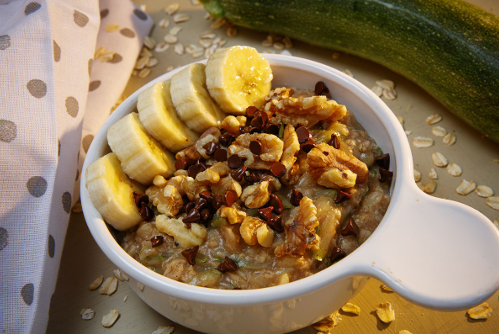
For something completely different with oats you may want to try Zoats.
This recipe combines zucchini and peanut butter to change up that traditional bowl of oatmeal. If you’re not quite ready to add a vegetable to your oatmeal, just omit from it and follow the instructions to make your oatmeal in the microwave. It only take a minute or two longer than instant oats and is cheaper and healthier. Be sure to use a bigger bowl than you think you’ll need with lots of “space” at the top to avoid overflowing as the oatmeal cooks in the microwave.Zoats