I remember when I was a kid and my mom and grandma always said “fish is brain
food”—they were right. Fish is like a multivitamin for your brain.
Fish and shellfish can supply the low-fat protein and other essential nutrients needed
for brain development, strong bones, a healthy heart and immune systems. But they
are also finding that fish provides the vitamins and minerals important for mental
health. According to the Seafood Nutrition Partnership, the nutrients that tend to be
low in people who are depressed—vitamin D, magnesium and zinc--are found in fish.
One important nutrient found in fish is omega-3 fatty acids. Omega 3s promote
cardiovascular health as well as reduced risk for type-one diabetes. High consumption of omega-3 fatty acids has also been associated with reduced risks for Alzheimer’s disease, decreased anxiety and depression.
All of this is great news. But the problem is that our bodies can’t make omega-3 fatty
acid, we have to get it from the foods we eat. Even though we know this, almost 90% of Americans DO NOT eat enough seafood. Do you?
How much should you eat?
The Dietary Guidelines for Americans recommends eating fish as part of a healthy eating plan. The current guidelines on seafood encourages eating eight-ounces or more per week of a variety of seafood for the general population.
Proponents of the Mediterranean Diet offer similar recommendations saying that
changing the kinds of proteins you eat is one of the most impactful ways you can
improve your diet. Eating more fish and seafood is a major way to do this. People
following the Mediterranean Diet eat at least eight-ounces of fish or seafood a week. At least one serving should be of a high fat fish such as salmon, mackerel, anchovies,
sardines or herring.
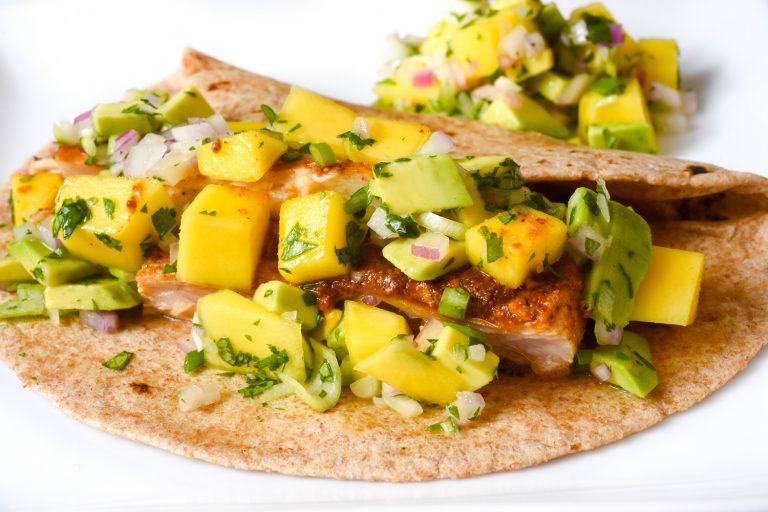
One of the major reasons people don’t eat enough fish is they don’t know how to cook it. Our Med Instead of Meds program can help with this. Med Instead of Meds was developed by NC Extension and the NC Department of Public Health program and the website offers several ideas and recipes on easy ways to prepare fish. This recipe for Fish Tacos with Avocado-Mango Salsa comes from this website.
These fish tacos are so light and fresh, they will even turn the heads of the fish taco
haters. Any white fish such as pollock, catfish, grouper, haddock, halibut, rockfish, mahi mahi, striped bass, or swordfish will work. So, look for what’s available, what you like and what you can afford.