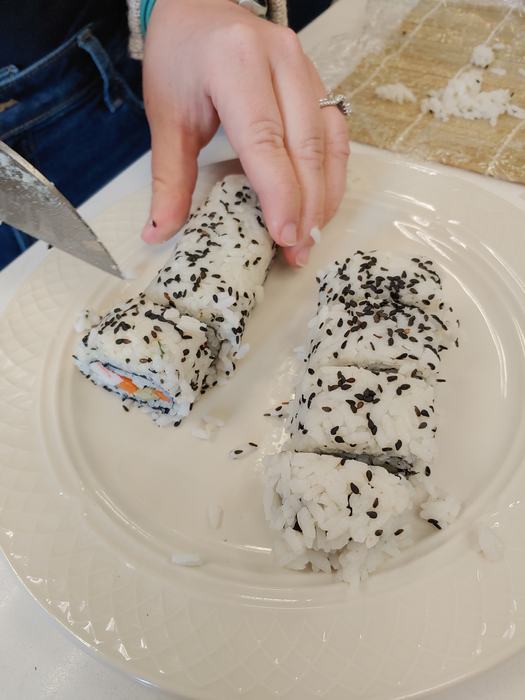
"I don’t do sushi" was a response I got to a recent invitation to a meeting of our Extension Master Food Volunteers (EMFVs). This was a training for the EMFVs and we were all going to learn about sushi.
After a little more questioning, I found out this person just didn’t want to eat raw seafood. OK, I respect everyone’s choices about what they eat and the risks they are willing to take with their food.
But, let’s talk a little about sushi and eating raw seafood...
First, sushi isn’t just raw seafood. Sushi is traditional Japanese food that features seasoned rice. The rice is the key. This rice gives sushi its special flavor. Sushi rice is made by combining medium-grain white rice with rice vinegar, sugar, salt and sometimes other seasonings. This rice is then used as the base of sushi rolls, as a bed for sashimi, or even simple sushi bowls.
While most do contain raw seafood, there are many sushi choices that do not. Some sushi contains cooked seafood such as shrimp, scallops, and crab as well as fruits and vegetables. It’s the combination of this flavored rice and the other ingredients that give sushi its unique and sometimes habit-forming to-be-craved flavors. Saying that. There are some food safety concerns. Sushi is one of those foods that can be risky — especially for people such as children, the elderly, the
immune suppressed and pregnant women who are already more susceptible to a foodborne illness.
In restaurants, if the sushi has been prepared according to regulations of the US Food and Drug Administration (FDA) and local and state health regulations, it should be safe.
These are some things to keep in mind when ordering, making or eating sushi:- Uncooked seafood. Raw animal/seafood products may contain bacteria. Cooking seafood to 145 degrees F can reduce the risk of foodborne illness. Safer sushi is made with cooked products or fruits and vegetables. Cross Contamination. Just like any other food, the fish or other ingredients in sushi could be contaminated at any point along the food chain—from the fishermen to the processor to the sushi chef to the consumer. Without the cooking step, you are eliminating that final step that could kill any pathogens.
- Temperature Abuse. Just like other foods, the raw seafood and other ingredients (including the sushi rice) should be kept at the appropriate temperatures. Raw or cold foods at 41 degrees or below and cooked hot items over 135 degrees.
- Poor personal hygiene and sanitation. Watch the sushi chefs. How often do they wash their hands or sanitize the rags they are using? Are they wearing gloves when they make the sushi? Boards and utensils should be cleaned and sanitized frequently, especially when preparing uncooked products and then transferring them to a cooked or vegetable dish.
- Parasites. While it does not happen frequently, there are several parasites that have been associated with seafood. These parasites are found naturally in some seafood and become a concern when people eat raw, partially cooked or lightly preserved fish such as sashimi, sushi, ceviche, and gravlax. Some of the fish that will be eaten raw or partially cooked should have been frozen to destroy any parasites that may be naturally in the fish. Good sushi restaurants purchase their fish from suppliers that properly freeze their fish (this is a Food Code requirement). Proper cooking will also destroy these parasites. Parasites consumed in uncooked, undercooked, unfrozen seafood can present a human health hazard. It’s good to note that not all seafood is prone to parasites and these are the ones we most frequently see served raw or slightly food. Seafood that does NOT need to be frozen to destroy parasites includes molluscan shellfish, many species of tuna including yellowfin (ahi), bluefin, bigeye, albacore, or blackfin, and some farm-raised salmon.