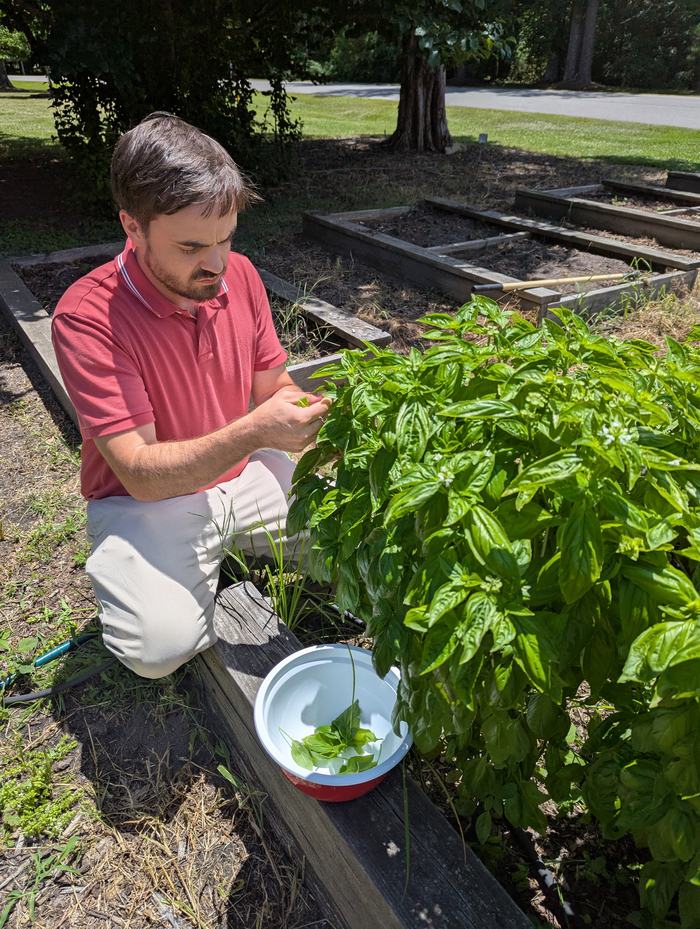
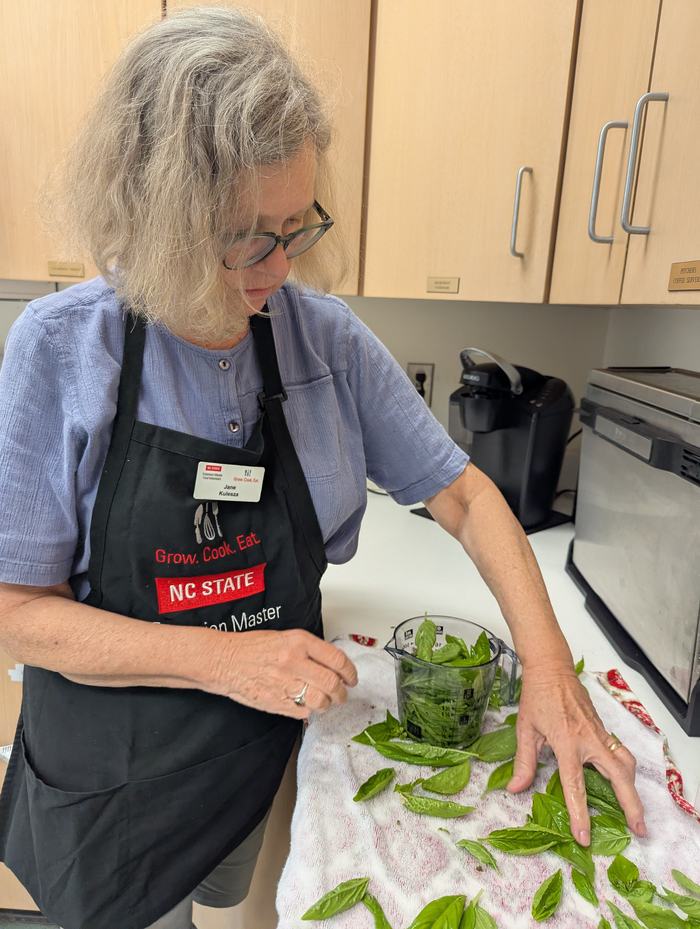
The fabulous basil planted at our N.C. Cooperative Extension Office was ready to be harvested. Our Extension Master Food Volunteers jumped in and made pesto.
Basil is a fairly easy to grow garden herb. You don’t need a garden or a raised bed, it’s perfectly happy in a container on a deck or porch. Basil does need a sunny location and a constant supply of moisture. It should be harvested several times during the growing season. The more you harvest the more you get. According to the Clemson Cooperative Extension Home and Garden Information Center, to create thicker plants with more tender foliage for harvest, the terminal growth of basil plants should be pinched out periodically. For the most flavorful leaves, when flower spikes or buds need to be pinched out as soon as possible as basil tends to become bitter once these flowers bloom. With the extremely hot weather we've been experiencing basil tends to bloom more often. Basil is a tender annual and will not survive the winter, so enjoy it now.
It is a tender herb and needs to be handled carefully. Basil blackens and bruises very easily when cut. If you have a bunch you’re trying to keep, place in a glass of water (like you would a bouquet of flowers) and store on the counter top (not in the refrigerator).
Pesto is easy to make and a great way use and preserve this herb. Use this recipe as a starting point for ingredients and the amounts needed. You can adjust based on your flavor preferences.Basil Pesto
- 2 cups basil leaves, packed
- 2-3 cloves garlic
- 1/ 4-1/3 cup pine nuts
- ½ cup olive oil (may need a little more)
- ½ cup Parmesan or Romano cheese grated or shredded (about 2 ounces)
- Salt (to taste)
A food processor is the ideal appliance to use when making pesto. The EMFVs used a blender and it did take some extra work and some extra olive oil incorporating all the ingredients. If you don’t have either, you could use a mortar and pestle or finely chop and mash ingredients. Start with the garlic and salt, then add nuts and basil and stir in oil and grated cheese at the end.
Pesto is one of those recipes where you can experiment and change based on your preferences. Traditionally, pesto is made with pine nuts, but they can be pricey. You substitute other nuts such as cashews, almonds, pecans or walnuts as you like or have on hand. For more flavor, toast the nuts before adding.
Basil is the traditional ingredient in this pesto, but other herbs or leafy greens such parsley, kale, spinach or even carrot tops could be substituted for all or part of it. Lemon juice and lemon zest can be added for a unique flavor. For a spicier pesto, try adding a dash of black pepper or red pepper flakes.
Pesto is frequently used as a sauce for pasta, but it can be a topping on grilled or roasted meat, fish or poultry. Try mixing with mashed avocado, mayonnaise or tahini for a creamy dip, sauce, spread or dressing. Or add to scrambled eggs, omelets, quiche and frittatas or to season sauces and soups.
We made over 14 cups of pesto, so needed a way to preserve it. According to the National Center for Home Food Preservation (NCHFP) there is not a research tested recipe for canning pesto. But it may be frozen for long term storage. Package in glass freezer jars or plastic freezer boxes, leaving 1/2-inch headspace. Label and freeze. To use frozen pesto, thaw in refrigerator or defrost in microwave. Don’t allow pesto to overheat in microwave, as it should not cook.Additional Resources
https://hgic.clemson.edu/factsheet/basil/#:~:text=To%20grow%20any%20cultivar%20of,to%20between%206.0%20and%206.5https://hgic.clemson.edu/factsheet/drying-herbs-seeds-nuts/
Syracuse is a Family and Consumer Science team member and can be reached at N.C. Cooperative Extension, Brunswick County Center 910-253-2610 or by email at clsyracu@ncsu.edu