Vacuum sealers or vacuum packing machines are popular and frequently found in home kitchens.
Vacuum Packing
(Updated: March 15, 2024, 7:04 a.m.)
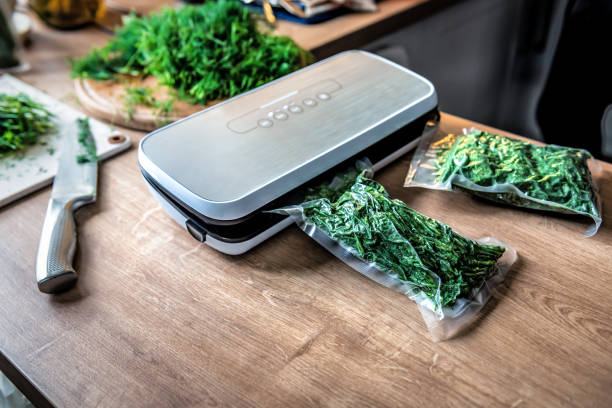
Their main purpose is to remove air from a food package before sealing. Vacuum packing changes the food’s environment. It solves some food storage problems, but could also cause others. There are definitely some good and bad, pros and cons and cautions for using one of these packing machines.
Pros
The benefit of removing air from a food package is the increased storage time of refrigerated, frozen and dried foods. Oxygen in the environment can cause a rancidly in fats in food and certain color changes. When the oxygen is removed, the food’s quality and shelf life can be extended. Removing the air is especially good for storing non- perishable dry foods such as dried food, nuts or crackers.Vacuum packaging is also good for food that will be stored frozen. When doing this, the key thing to remember is proper thawing under conditions that minimize bacterial growth – like refrigeration—is essential. If the package stays closed during thawing, you still have a vacuum environment where bacteria can be active if the temperature is warm enough.Cons
The National Center for Food Preservation warns that there are risks with vacuum sealed food products. Some harmful bacteria grow much better and faster in vacuum sealed products than if they were not vacuum sealed. This low-oxygen environment is just right for the development of several pathogens, but one to be specifically concerned about is botulism. This pathogen grows best at room temperature in low-acid moist foods in low oxygen conditions. Unlike bacteria that spoil food, these disease- causing bacteria may not change the color or look of the food. So, it could be there and you wouldn’t know it.Perishable foods that need to be refrigerated or frozen without vacuum packaging still need to be refrigerated or frozen once sealed. Dr. Elizabeth L. Andress, former director of the National Center for Home Food Preservation stresses that “vacuum packaging is not a substitution for the heat processing of home canned foods.”
To avoid the risks related to vacuum sealed foods, here are a few safety tips:- Wash hands before and during the vacuum sealing process.
- Try not to touch food with your hands. Use clean spoons, tongs or to handle the food.
- Be sure to keep utensils, cutting boards and counters clean.
- Keep vacuum sealed perishable foods in the refrigerator or freezer.
- Vacuum sealing is not a replacement for heat treating such as water bath or pressure canning when preserving foods.
- Vacuum packaged perishable food should not be out of refrigeration longer than 2 hours total time above 40 degrees F.
- Frozen vacuum-packed foods should be labeled and dated and used within a reasonable storage time.
- Raw meats, poultry and seafood still need to be cooked thoroughly to recommended temperatures, measured with a food thermometer, before eating.
- Thaw frozen food in the refrigerator. The vacuum bags should be removed during this thawing process.
- Dry food, like crackers, chips and nuts, can be stored at room temperature.
Sources: The University of Minnesota Extension and The National Center for Home
Food Preservation
Syracuse is a Family and Consumer Science team member and can be reached at N.C. Cooperative Extension, Brunswick County Center 910-253-2610 or by email at
clsyracu@ncsu.edu
Join our mailing list!
Enter your email address to receive updates.
Written By

Contributors