Try Tuna

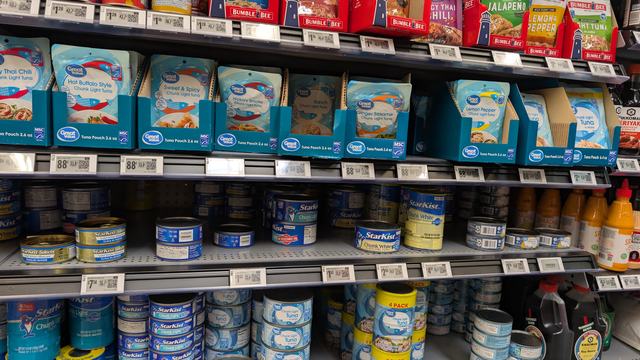
Cans of tuna on shelf at grocery store.

The Mediterranean Diet recommends limiting the amount of red meat in our diets and replacing some of the meat with plant protein such as beans, nuts, and seeds often. Another part of this recommendation is to eat fish and seafood at least two to three times per week.

Even though we live near the coast, eating seafood several times a week can be difficult for many. There are lots of reasons people don’t eat seafood. Perhaps it’s the cost or they don’t know how to cook it.

To get some of these seafood servings, why don’t you try canned tuna?

Dr. Carolyn Dunn, RDN, LDN a William Neal Reynolds Distinguished Professor Emerita at NC State, recently wrote about canned tuna in the Eat Smart, Move More, Prevent Diabetes (ESMMPD) blog. She feels that it is an overlooked or forgotten food.

Canned tuna is high in protein, shelf stable, affordable, and versatile. She says that sometimes people avoid can tuna due to concern about mercury in the fish. However, canned light tuna is actually low in mercury. Canned white or albacore tuna has higher mercury levels, but even this type of tuna can be consumed weekly. So, don’t let the fear of mercury stand between you and eating fish. The most commonly consumed fish and seafoods here in the US present very little risk from contaminants like mercury while offering many healthful and nutrition benefits.

Take advantage of the 22 grams of protein and only 100 calories in an entire 5-ounce can of water-packed tuna. If you choose tuna canned in oil it will, of course, have more calories.

Here’s a recipe that is highly recommended by Dr. Dunn for tuna burgers made with canned tuna. It comes from our Med Instead of Meds curriculum on the Mediterranean Diet. This recipe is a quick and easy that could make dinner or lunch a breeze. Leftover patties refrigerate well and can be eaten the next day (cold or reheated) for a convenient meal at work or home. Top your burger with lettuce and tomato or your favorite garnish to make it your own.
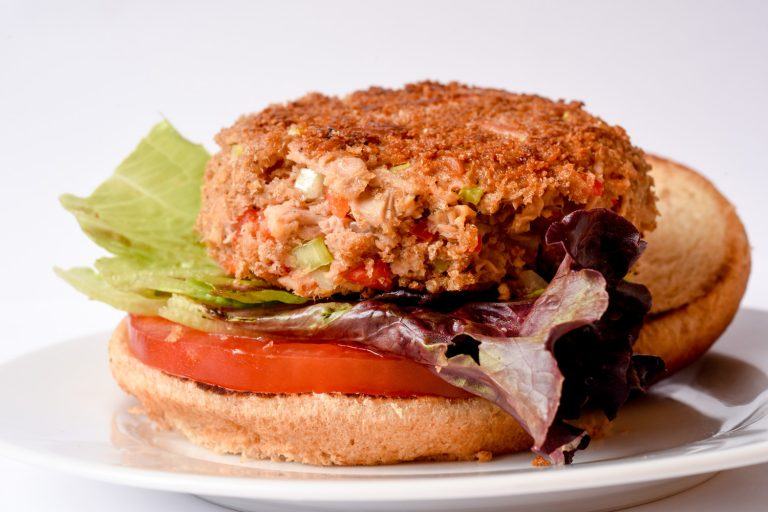

Tuna burger.

Tuna Burger

This recipe calls for whole grain breadcrumbs (a good—maybe a little sneaky--way to get those whole grains in the diet). You can make your own by tearing your favorite whole grain bread into pieces and processing in a blender or food processor until crumbs form. Spread on a baking sheet and bake at 250°F until dry (approximately 10 to 15 minutes). One slice of bread makes about ⅓ cup breadcrumbs.

Ingredients

  • 2 (5-ounce) cans of tuna packed in water or olive oil, drained and flaked
  • 1 cup whole-grain bread crumbs, divided
  • 1 egg, lightly beaten
  • ¼ cup minced celery
  • ¼ cup minced onion
  • ¼ cup minced red bell pepper (option: roast or sauté pepper first for added flavor)
  • 1 teaspoon Italian Seasoning (usually a blend of oregano, parsley and rosemary)
  • 1 tablespoon olive oil
  • 6 whole-grain hamburger buns or English muffins, toasted
  • 6 leaves of lettuce
  • 1 tomato, sliced
  • Mustard (optional)

Directions

  1. In a medium bowl combine tuna, ½ cup bread crumbs, egg, celery, onion, bell pepper, and Italian Seasoning. Break up any large pieces of tuna until the mixture is uniform and holds together.
  2. Form six patties with tuna mixture. Coat each side with remaining ½ cup bread crumbs.
  3. Heat oil in a large skillet over medium heat. Cook each patty until heated through and golden brown (approximately 5-7 minutes on each side).
  4. Serve patties on whole-grain hamburger bun or English muffin. Garnish with lettuce, tomato, and mustard (optional).

Nutrition information (one patty—no bun): 242 calories, 14 grams of protein, 7 grams of fat and 430 grams of sodium.

If you want to know more about the Mediterranean Diet, check out our Med Instead of Meds program (medinteasdofmeds.com) There is a great section on ways to change your protein and recipes to help you do this. They also have a couple other recipes made with canned tuna that you might want to try including Mediterranean Tuna Salad and Best Tuna Sandwich that offers a real Mediterranean twist for the dressing.

For more information on Eat Smart, Move More, Prevent Diabetes check out their website (esmmpreventdiabetes.com) This is a CDC recognized, 12-month diabetes prevention program based on strategies proven to prevent or delay type 2 diabetes.

Both programs have been developed by NC State University, NC Cooperative Extension along with the NC Division of Public Health.

Check out these resources:


Syracuse is a Family and Consumer Science team member and can be reached at NC Cooperative Extension, Brunswick County Center 910-253-2610 or by email at
clsyracu@ncsu.edu