Most people struggle to get enough fiber in their diets. The Institute of Medicine estimates that only five percent of women and nine percent of men meet the recommended daily intake. On average Americans get only about 14 grams each day. That’s about half of the recommended amount of 25-35 grams of fiber each day.
We all know that dietary fiber can help with bowel movements by helping to decrease the chances of constipation or it can do the opposite by solidifying watery stools. It’s also beneficial in treating or preventing hemorrhoids and diverticulosis.
But fiber can help in many ways in addition to this bowel health. Fiber can help regulate blood sugar levels, lower cholesterol, lower blood pressure and also help achieve healthy weight by controlling hunger. Studies also show that increasing dietary fiber can help us live longer by reducing the risk of dying from cardiovascular disease and all cancers.
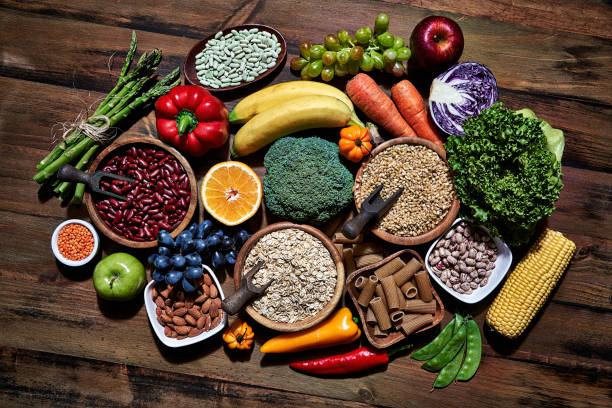
Dietary fiber is only found in plants such as vegetables, fruits, nuts and grains.
Meat, milk and eggs do not contain any fiber. Different types of plants have different amounts and kinds of fiber. According to a Colorado State University Extension publication, “the form of food may or may not affect its fiber content. Canned and frozen fruits and vegetables contain just as much fiber as raw ones. Other types of processing, though, may reduce fiber content.”
The removal of seeds, peels or hulls also reduces fiber content. Examples: whole tomatoes have more fiber than peeled tomatoes, which have more than tomato juice. Likewise, whole wheat bread contains more fiber than white bread.
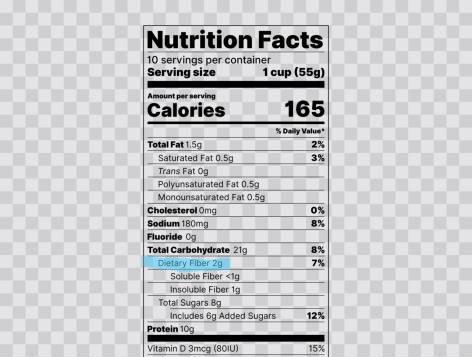
You might want to track your fiber intake for a few days, see how much you’re eating now. Nutrition Facts Labels can help. Packaged foods will have the fiber content listed in grams. Look for foods that have 5 or more grams per serving.
Most fresh fruits and vegetables don’t come with nutrition labels, but fiber content can easily be found on the internet. The 2020-2025 Dietary Guidelines site has a good chart. Higher fiber fruits are raspberries, pears, apples (with the skin), strawberries and avocado. Vegetables that rank up there are carrots, Brussel sprouts, broccoli, peas and potatoes (with the skins). Other high fiber foods are beans and lentils, chia seeds and nuts.
If you find you need to increase dietary fiber, here are some simple ways to include fiber into your daily meals and snacks:
Leave the skins on fruits and vegetables
Choose whole grains instead of refined foods. Quinoa, bulgar, farrow and barley
are good choices.
Add beans to soups, stews and salads
Add fruit to yogurt, oatmeal, cereals and salads
Add grains and whole wheat pasta to soups
Top your salads with toasted nuts or seeds instead for croutons
Choose fruit over fruit juice
Add chia or flax seeds to your baked goods/yogurt or oatmeal
When baking use whole-grain flour for at least half the flour in the recipe
Add fruits and vegetables (with seeds and skins) to baked products
Consider high fiber foods such as fresh fruit, raw vegetables, popcorn and whole grain crackers as snacks.
A quick word of caution: don’t get carried away and eat too much! Although fiber is
important, it is just one part of a balanced diet, and like all foods, should be consumed in moderation. It is possible that too much fiber may reduce the amount of some nutrients absorbed from food.
Also, if you’re not used to eating higher fiber foods, start slow to avoid problems with gas and diarrhea. Spread your fiber consumption over the whole day, don’t overdo it in one meal.
Syracuse is a Family and Consumer Science team member and can be reached at N.C. Cooperative Extension, Brunswick County Center 910-253-2610 or by email at clsyracu@ncsu.edu