It seems everywhere we look someone is talking about (or trying to sell us) protein. I think it’s interesting that restaurants now ask what kind of protein we want on that salad or pasta—they never used that word before. Protein can be found in snack bars, sports drinks and powders. There is even protein tortilla chips, special fancy coffees and protein water.
But this brings up lots of questions. Do you really need to supplement and add more protein to your diet? Is this a marketing ploy? Do you need to spend the “extra” money? Are you helping your body and your health with these products?
According to Dr. Carolyn Dunn, RDN, LDN the William Neal Reynolds Distinguished Professor Emerita at NC State, most Americans get enough protein. She recently wrote about protein in the Eat Smart, Move More, Prevent Diabetes (ESMMPD) blog. The recommended amount of protein for someone under 40 years old is 0.8 grams per kilogram of body weight—that’s 0.36 grams per pound of body weight. So, if you weigh 150 pounds you should eat 54 grams of protein each day. For someone over 40 that increases to 1 gram per kilogram to 68 grams. Over 60 years of age means another increase to 1.2 grams per kilogram of weight or 81 grams of protein for someone who is 150 pounds.
As you can see, as we age (don’t you hate hearing those three words?) protein is a nutrient that older people should be more concerned about. She goes on to say that as our bodies age they are less responsive to proteins, which means we need more. Loss of muscle, or sarcopenia, increases with age. Losing muscle decreases our ability to heal, leads to loss of balance, an increased fall risk, and loss of energy. Holding on to as much muscle as possible means overall healthier aging. Note: she also comments that resistance training is just as important as getting enough protein for those muscles-- especially as we get older.
Dunn says getting enough protein does not have to be hard and you don’t need to rely on special products or highly processed foods that contain added protein to get this needed amount of protein. She also shared that our bodies cannot use much more than 30-35 grams per meal so we need protein throughout the day to make sure we get enough. Aim for 25-35 grams per meal (depending on your body weight).
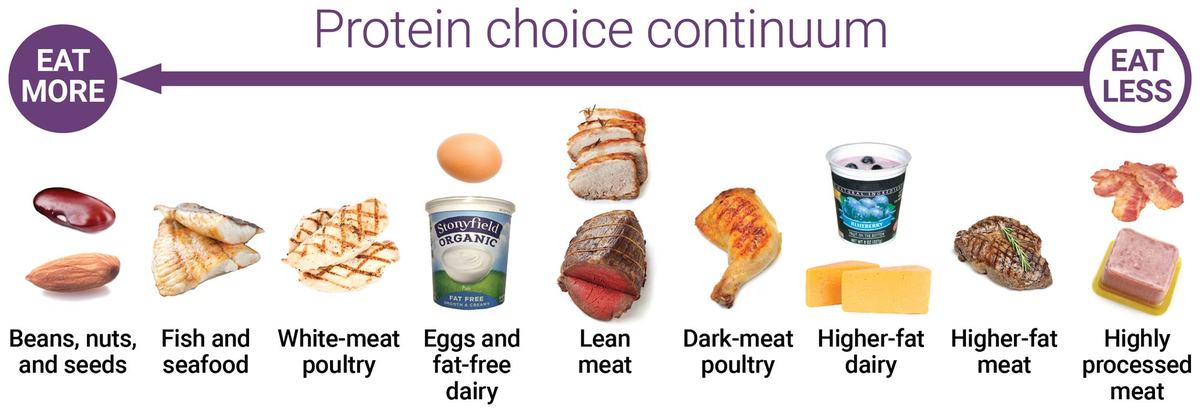
While animal protein from meat or dairy are complete proteins with all the essential amino acids, a mixture of plant and animal protein is recommended. Changing the kind of protein you eat to primarily plant-based or seafood sources is a main component of the Mediterranean diet. Eating the Mediterranean way has been shown to have many health benefits including reducing the risk of heart disease, cancer, and diabetes.