- Improve plant health?
- Train young trees to desired shape?
- Improve conditions under the canopy?
- Improve aesthetics?
- Safety?
- Manage growth and size?
When and How to Prune
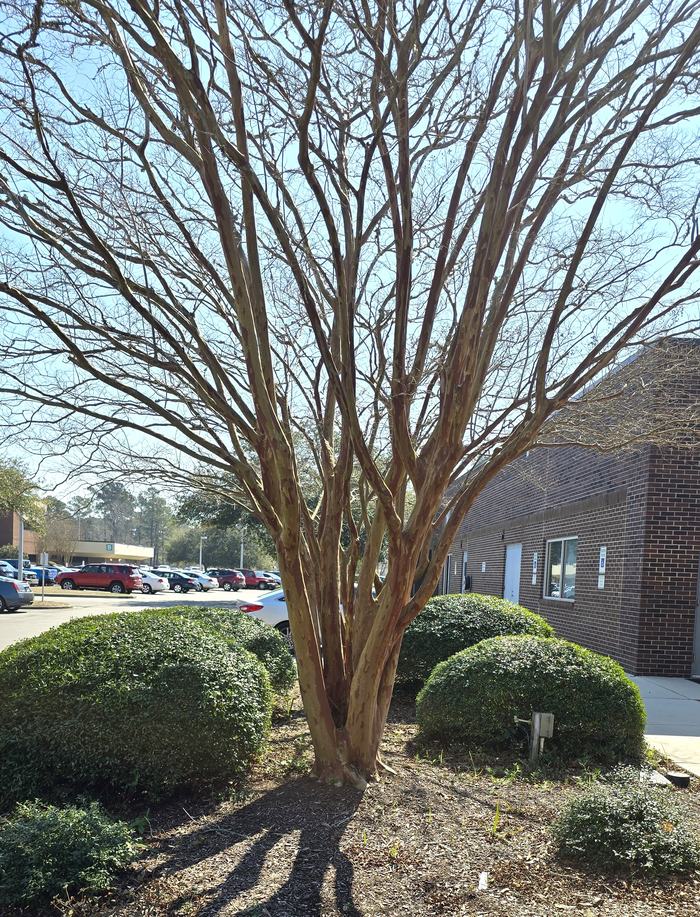
Any time of year, remove diseased, damaged, or dead branches, crossing branches as well as water sprouts from the base of the tree.
Late winter/dormant season is ideal to prune trees, including the Crape Myrtle, because you can better see the structure of the tree when no leaves are present.
For general maintenance tips for pruning Crape Myrtles, here’s a short video from the LSU Ag Center on How to Prune a Crape Myrtle , as well as a helpful fact sheet from Clemson Crape Myrtle Pruning | Home & Garden Information Center
Is Size an Issue? Most trees, including Crape Myrtles, generally shouldn’t need to be pruned for size if planted in the right place.
Take for example this photo of Crape Myrtles planted under power lines. The projected height of these trees is much taller than the power line, resulting in topping them off annually.
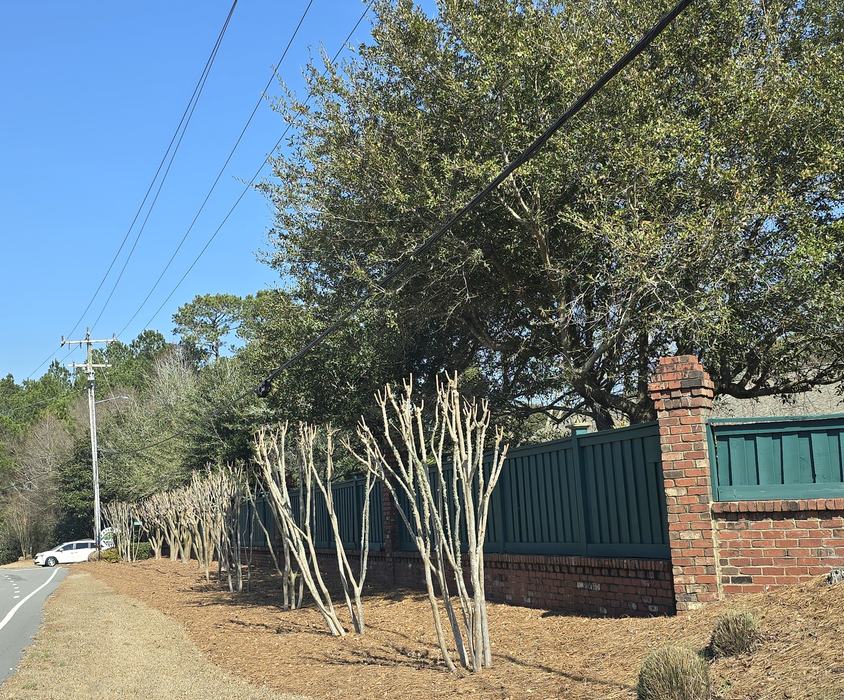
Right down the road, we see a line of Crape Myrtle trees cut back for size, even though there is no power line issue or vertical/horizontal limitation. This is the most frequent pruning method we see in Crape Myrtles, which is not-so-affectionately known as “Crape Murder”.
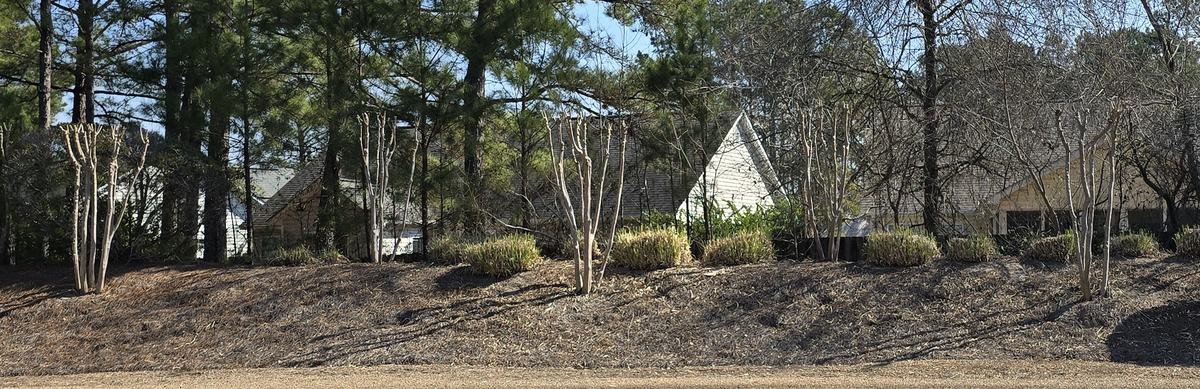
Too often crape myrtles are cut back to stubs in the middle of branches. It’s important to consider that Crape Myrtles are not shrubs; they are multi-trunked trees.
This type of severe pruning can result in a shorter bloom time, delayed flowering, weaker branching, and can increase insect and disease problems.
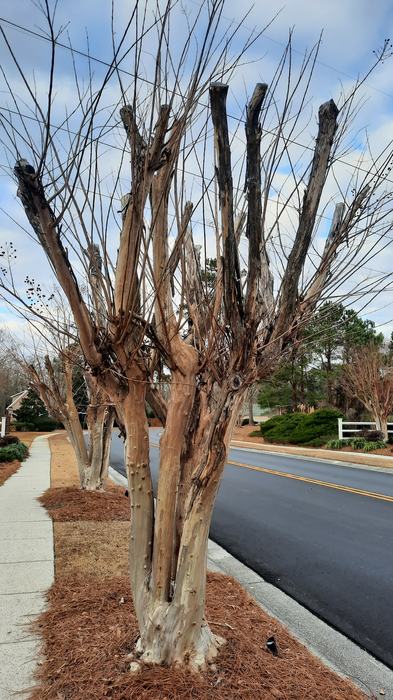
When cut back this way, they also develop unsightly “knuckles” caused by the tree trying to “heal” itself and compartmentalize around the wound.
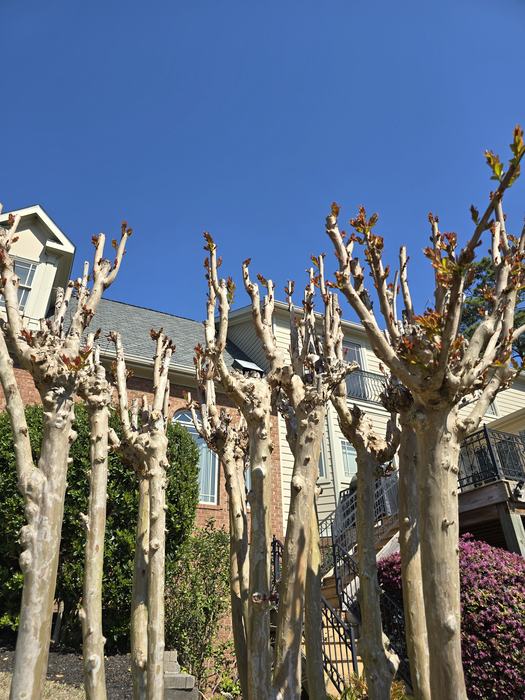
This practice, known as "topping", can be harmful to trees in the long run, and is not the preferred pruning method to reduce the size of the tree.
To prune a tree for size (if needed), a better method is to use “reduction” cuts, or in other words, remove the tall branch back to the desired lateral branch versus cutting a branch back in the middle as you might do with a shrub.
You can see more information and diagrams here:NC Urban Tree Council Proper Tree Pruning
Here are some resources for to help with Crape Myrtle Selection:
Clemson Crape Myrtle Cultivars | Home & Garden Information Center
NC Extension Plant Toolbox Lagerstroemia (Crape Myrtle, Crepe Myrtle)
OR
You might think about alternative plant selections such as American Fringe Tree, Chaste Tree, Serviceberry, Sweetbay Magnolia, to name a few. You can research alternatives by using the North Carolina Extension Gardener Plant Toolbox.
Questions? Contact our Consumer Horticulture Team, 910.253.2610 or visit us in the Cooperative Extension Office, 25 Referendum Drive, Building N, Bolivia NC.
Enter your email address to receive updates.