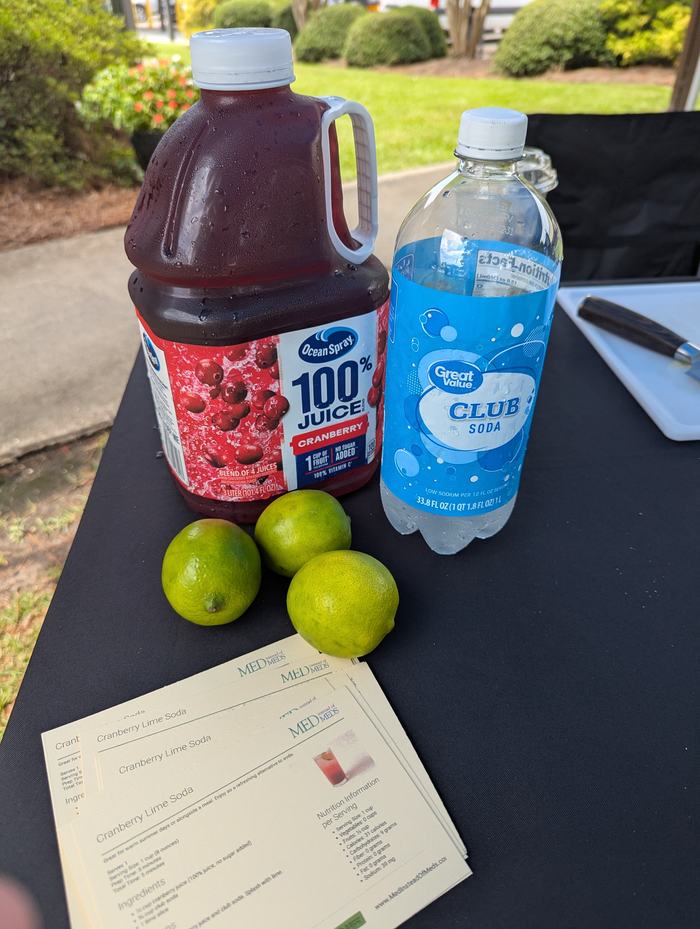
Our Family and Consumer Sciences team staffed an exhibit which looked at added sugars in our diets. In general, American’s consume too much added sugar. This excess sugar can lead to health problems including weight gain, obesity, type 2 diabetes, heart disease and cavities.
Think you don’t get that much? It’s estimated that on an average day, adult men consume 19 teaspoons and adult women consume 15 teaspoons of added sugars. So, you may ask, how much sugar am I supposed to have every day? I’m talking added sugars here—not the kind of sugar that’s naturally in food like fruits, vegetables and milk. Added sugars are those found in beverages, sweets, snacks, condiments, sauces and processed foods. Luckily, food labels now tell us the difference between natural sugars and added sugar.
You really don’t need any added sugars each day. The Dietary Guidelines for Americans 2020–2025 recommend that people age 2 years or older limit added sugars intake to less than 10% of their total daily calories. That means for a 2,000-calorie diet, no more than 200 calories should come from added sugars. That’s about 12 teaspoons of added sugar from both food and beverages a day (that’s less than in one 20-ounce soda). An added note: children younger than 2 years should not be given any foods or beverages with added sugars.Sugary drinks are the number one source of added sugars in the American diet. Drinks with added sugars include sodas, fruit drinks, sweetened teas, flavored coffees, flavored waters, chocolate milk, sports drinks and energy drinks. Here are a few examples of the amount of added sugar in 12-ounce beverages:
Brewed sweet tea = 7 teaspoons
Energy drink = 9 teaspoons
Regular soda = 10 teaspoons
- Choose water, when possible, instead of sugary drink. This can be tap water or unsweetened, bottled water or sparkling water. Need more flavor? Add berries or slices of lime, lemon or cucumber to the water.
- Read labels to see how much added sugar is in the drinks you choose. You really want a fizzy drink? Add a splash of 100% fruit juice to plain sparkling water for a bubbly, low-calorie drink.
- Need help breaking the soda or iced tea habit? Don’t stock up on sugar drinks. Instead, keep a jug or reusable bottles of cold water in the fridge and carry a reusable water bottle with you and refill it throughout the day.