If you’re having a few folks over this holiday season, you might want to try something
different and make a grazing board. These arranged displays of food are designed for
nibbling and snacking and ease entertainment because they don’t usually require plates or sitting down.
Folks sometimes call them charcuterie boards, relish dishes, or vegetable trays; but
“grazing board” better describes what guests do when they eat them….graze.
With grazing boards anything goes. Before making your board, determine if this need to be the complete meal, an appetizer or just something to nibble on during cocktails. Will it be themed: such as breakfast, brunch, dessert or birthday? Or go completely different with international boards featuring Mediterranean, Greek or Mexican tidbits.
You can also just use what’s in your fridge and pantry--hot or cold or a combination.
Grazing boards can be tasty and healthy, not just all high fat, sugar, and sodium. Try
incorporating some healthier options such as whole grain, fruits and vegetables. The
protein does not have to be expensive cured meats. Choose healthier proteins such
as roasted or grilled chicken chunks, maybe lower sodium deli ham, chicken or
turkey. Consider a variety of nuts, beans or seeds, too.
Fruits and vegetables add lots of color, crunch and nutrition to your board. They can be cut into unconventional shapes to add eye-catching elements.
Hard and aged cheeses are good choices because they can stay at room
temperatures for a long time. If using soft cheeses like Brie or Feta that should be
refrigerated, consider putting out small amounts at a time and replacing them
frequently throughout the event.
Be sure to add some fun and imaginative foods to give it some pizzaz such as relishes, jams, mustards, dips and salsas. These can go into small bowls or cups and arrange the other foods around them.
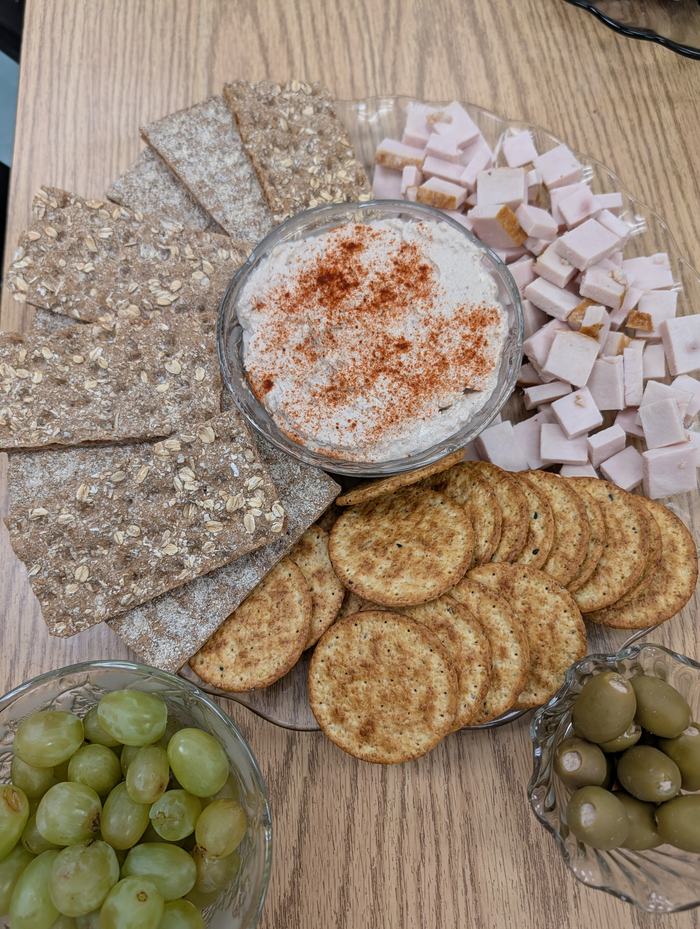
We recently had a holiday luncheon at our office and made several grazing boards
to experiment with tastes, textures and arrangements. For one of our boards we
opted for a spreadable Salmon Pate. For both convenience and cost this pate was
made with canned salmon.
Some tips we learned: make sure your cream cheese is soft when you start to allow
it to mix easier. Using a food processor makes the final pate creamier. You also may
want to experiment with a few more herbs and spices—try dill, lemon pepper or
some seafood or bay seasoning. Don’t use crackers that overpower the salmon
flavor.
Here’s our recipe for
Salmon Pate
- 1 can (14.75 ounce) salmon, drained and skin and bones removed
- ½ cup plain unflavored Greek yogurt
- ½ cup cream cheese, softened
- 1 Tablespoon lemon juice
- 2 teaspoons horseradish
- 1 teaspoon Dijon mustard
- ¼ teaspoon Worcestershire sauce
- ½ teaspoon salt
- ½ teaspoon pepper
Combine all the ingredients in a food processor and blend until creamy. Chill for at
least an hour before serving. Place the pate in a small bowl and arrange the dippers
around it.Here are a few other thoughts on making and serving grazing boards.
- When planning your board, consider how long the food will be at room
temperature. While some foods are safe to stay at room temperature others will
need to be thrown out after four hours.
- Dips, dressings and foods like hummus can be placed in smaller bowls and
frequently replaced during the event. Don’t just refill the containers when they
are empty, be sure to wash the bowl before filling it back up.
- Since making an appealing display is important on these boards, you’ll probably
be using your fingers to place items “just so”. Remember to wash your hands
before beginning or consider using gloves as you assemble.
- While it would be tempting to just have everyone use their fingers (as most of
the items on these boards are finger food) ask yourself…do you really want all
those fingers touching and reaching for food items as they graze? You may want to provide some type of utensil such as tongs, little forks or toothpicks to
encourage folks not to use their fingers.
- Consider your guests, too. Are there folks with food allergies? It may be difficult
to avoid cross contact between foods. This is when an allergy food comes in
contact with non-allergy food. Obviously if you know someone has an allergy,
you can avoid adding that food to your board. You could consider offering that
food in a separate bowl or tray so it doesn’t touch all the other foods.
Get creative. Remember, people eat with their eyes. Happy grazing.
Resources:
Pinchin' Pennie$ in the Kitchen: 7 Steps to Creating a Charcuterie Boardhttps://extension.umaine.edu/food-health/2023/12/11/how-to-build-a-healthy-charcuterie-board-for-the-holidays/
Charcuterie Food Safety
Charcuterie Boards and Snacking
5 Ingredient Series: Charcuterie Boards
Syracuse is a Family and Consumer Science team member and can be reached at NC
Cooperative Extension, Brunswick County Center 910-253-2610 or by email at
Cheryle_Syracuse@ncsu.edu