I bet you’ve never really given radishes much of a thought. I know I didn’t, until one of our Extension Master Food Volunteers (EMFV) suggested we write a fact sheet about them.
To me radishes were those little vegetables that some people love and others not so much. They’re usually added to relish dishes for color and crunch and are frequently leftover when all the celery and carrots were eaten.
Last summer the Brunswick County EMFV wrote a series of fact sheets that were distributed at food pantries and at local farmer’s markets. These fact sheets are focused on produce and share info on selecting, storing, and using these items.
We were seeing lots of radishes, so we did some research and wrote a fact sheet on them. The goal was to get people to think a little differently about radishes and to eliminate food waste.
Radishes aren’t just those familiar little red vegetables. They can also be pink, white, purple, and black. Some varieties can grow to 100 pounds or more. I had some watermelon radishes that were beautiful. They were green on the outside and bright red in the center—looking just like a tiny watermelon—but with a sharp flavor.
Other varieties that you can seek out are Daikon and Black Radishes. Daikon radishes look like white carrots. Black radishes are about the size of potatoes and have a coal-colored outside with a white inside.
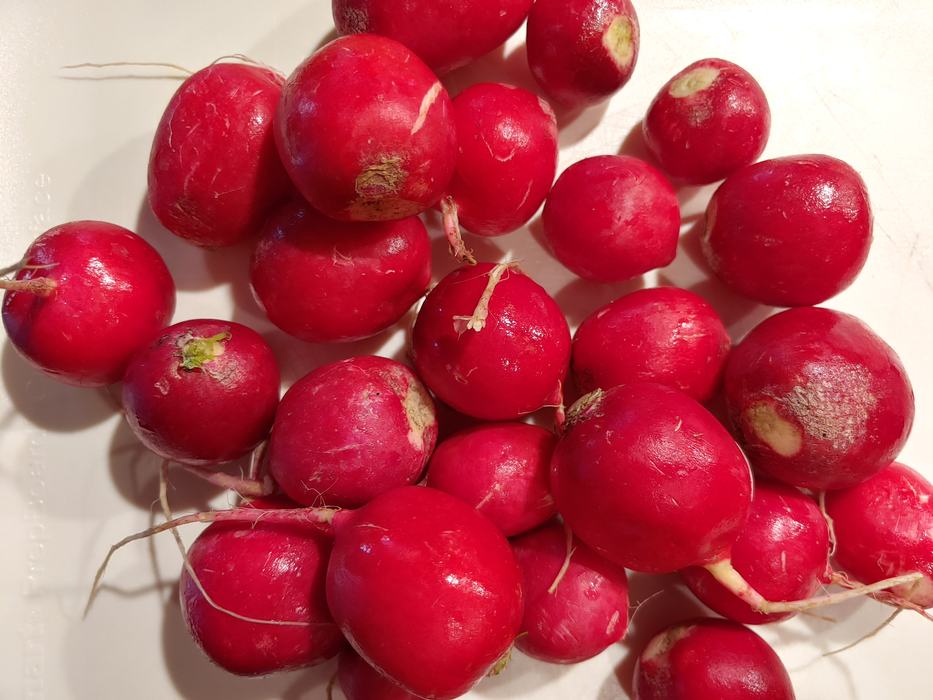
The common round red radish with a white center can be found in most grocery stores year-round. When buying radishes, choose those with smooth skin and bright colors. If there are attached tops, they should be green and fresh-looking. Store them in an open plastic bag in the refrigerator and use them within one to two weeks. Radishes don’t store well with the leafy greens left on, so cut the tops off. Radishes do not freeze well.
Nutritionally, radishes aren’t much. I mean that in a good way. They are fat-free, saturated fat-free, cholesterol-free, low in sodium, and low in calories. What they do have is Vitamin C. They also contain small amounts of potassium and folate. One medium radish has about one calorie. That makes them a great snack when you want something to crunch.
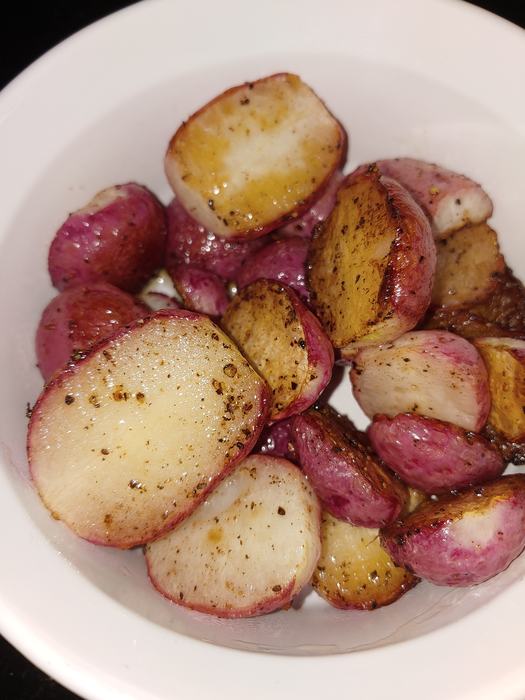
The taste of raw radishes has been described as “peppery” or “bitey”. When they are cooked the flavor tends to mellow and become sweeter.
Most people don’t think about cooking them, but they are a root vegetable and can be prepared similar to potatoes or carrots.
As you’re making oven-roasted or grilled veggies, add in a few radishes for a change. They can also be added to your favorite stir-fry recipe.
Here’s a recipe adapted from the Food Hero program at Oregon State University Extension for roasting radishes.
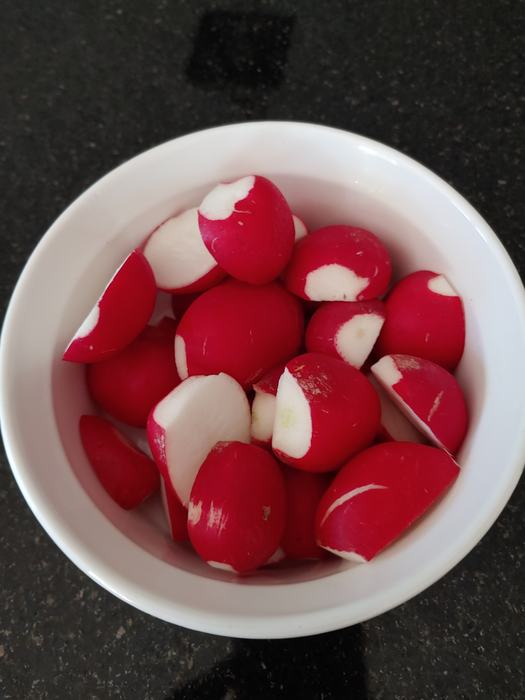
In a rimmed baking sheet, mix radishes with oil, salt, and pepper. Roast in the oven for 15 to 20 minutes until the radishes are tender and caramelized.
Remove from oven and sprinkle with lemon juice and dill, if desired.
Refrigerate leftovers within 2 hours.
We all know that eating more fruits and vegetables is important for a healthy diet. Adding radishes is just another way to add more variety to meals and snacks.
There is another cooked radish recipe on our produce fact sheet –this one is done on top of the stove. You can find it and all of the other produce fact sheets on our website. Most of the fact sheets also have an accompanying short video sharing their featured recipe on our YouTube channel. I hope you’ll check them out.
Cheryle Syracuse wrote this article and more similar ones for the Family and Consumer Sciences Column in the Brunswick Beacon. Syracuse is an FCS team member and can be reached at N.C. Cooperative Extension, Brunswick County Center, 910-253-2610 or by email at cheryle_syracuse@ncsu.edu.