Sometimes you just want dinner. You’re busy. You’re tired and really don’t want to think about anything but getting food on the table. This is when good kitchen habits help. The folks at More in my Basket (MIMB) at NC State, shared some risky kitchen habits.
Avoiding these can help keep your family healthy, because the last thing you have time for is a bout of foodborne illness.
1. Not washing your hands or kitchen surfaces before, during and after food prep.
To avoid foodborne illnesses (some folks call this food poisoning), it is important to wash your hands and any surfaces your food may touch. When washing your hands, make sure to use soap and water and then rub your hands together with soap for at least 20 seconds before touching your food again. Some USDA’s studies have found that most people forget to wash their kitchen space or their hands when cooking.
Keep your counters and kitchen surfaces clean and sanitize anything that has touched raw meat and its juices. Soap and water help to physically remove dirt and grime, but using a solution of one tablespoon of liquid chlorine bleach per gallon of water or a commercial sanitizer or sanitizing wipe helps remove germs.
2. Using the same cutting boards and utensils for raw and ready-to-eat foods.
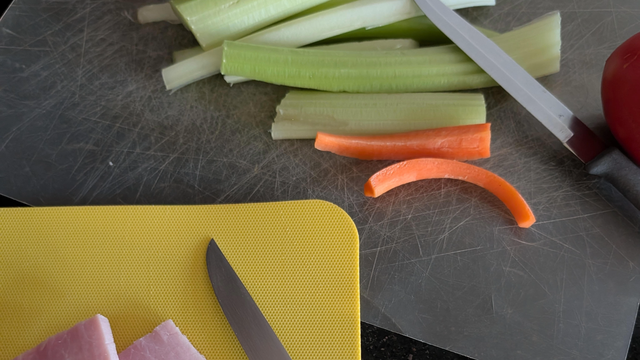
To avoid cross-contamination between all your kitchen surfaces and utensils, use one cutting board for raw meats and poultry and a different one for ready-to-eat foods such as fruits and vegetables. I have a collection of inexpensive plastic cutting boards that are easy to grab for different foods and then just throw in the dishwasher.
3. Defrosting any type of meat on the kitchen counter. Avoid leaving any frozen packages of meat or poultry on your kitchen counter at room temperature for more than two hours. The outer layers of the meat will defrost first and can become dangerous as foodborne bacteria multiply. Here are a few safe methods to safely thaw meat:
Refrigerator thawing: Allow roughly 24 hours for every four to five pounds of food. This does take some planning.
Cold water thawing: Allow 30 minutes per pound and submerge the frozen food. It’s best if the food is in its original wrapper (such as a big turkey) or tightly enclosed in a zip-top bag to avoid cross-contamination. Change the water every half hour until the food is thawed. Cook it immediately after thawing.
Microwave thawing: Use the defrost setting on your microwave oven or reduce the power to 30% or 50%. Place the unwrapped package on a microwave safe dish or rack. Start with about 3-5 minutes per pound (on 50% power) it may take some experimenting at first to figure out how much time. If possible, turn half way through. Don’t over do it, if it’s not completely thawed in this time, allow it to stand for several minutes before adding more time---you don’t want the outside to begin cooking before the inside has a change to thaw. Once thawed immediately complete the cooking as planned
4. Not using a food thermometer.
Invest in a small tip-sensitive digital food thermometer to test that your food has reached a safe internal temperature. A general rule of thumb is that beef and pork should be 145 degrees F, ground meats 155 degrees T and all poultry items 165 degrees F. There are lots of good temperature charts available.
5. Keeping leftovers too long.
When dinner is over, store your leftovers quickly, don’t allow them to stand at room temperature. Make sure to use small, shallow containers so they will cool quickly. Leftovers can be kept in the refrigerator for three to four days. Or freeze them. Frozen food is safe indefinitely but will keep the best quality if wrapped well and used within two to six months.
Developing good food safety practices can become habits that you use all the time. These practices can help you avoid getting sick and wasting food. The More in My Basket (MIMB) team at NC State can help you learn more about the SNAP program. SNAP stands for Supplemental Nutrition Assistance Program (formerly known as food stamps). SNAP is available for low-income families to provide assistance purchasing nutritious food. If you would like to learn more about this program or help with applying, contact MIMB at NC State. Their toll-free number is 1-855-240-1451 or visit their website at morefood.org. They also have lots of money saving ideas and recipes in their blog at this website.