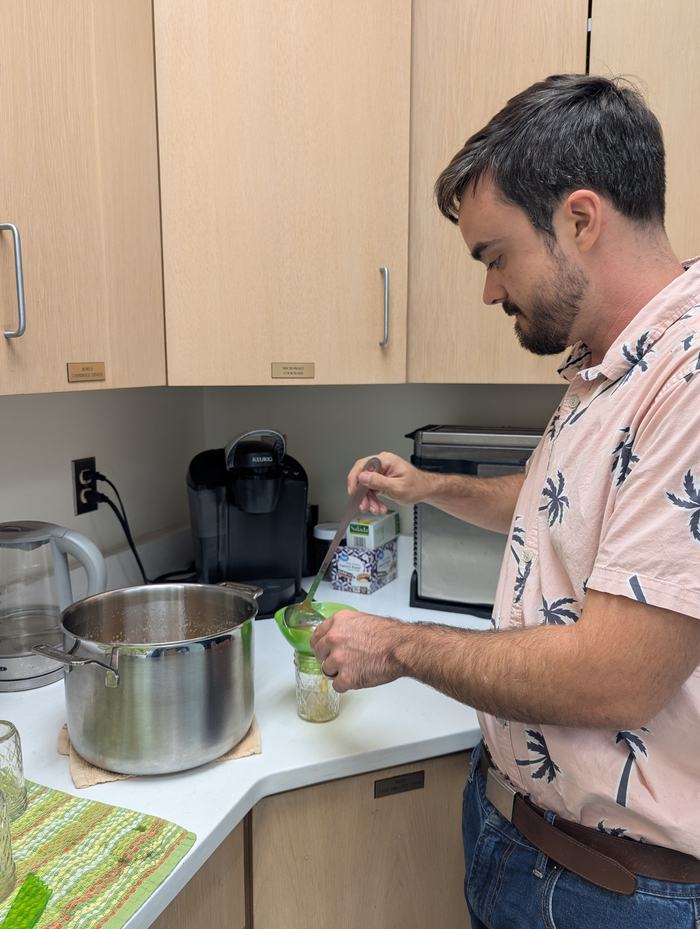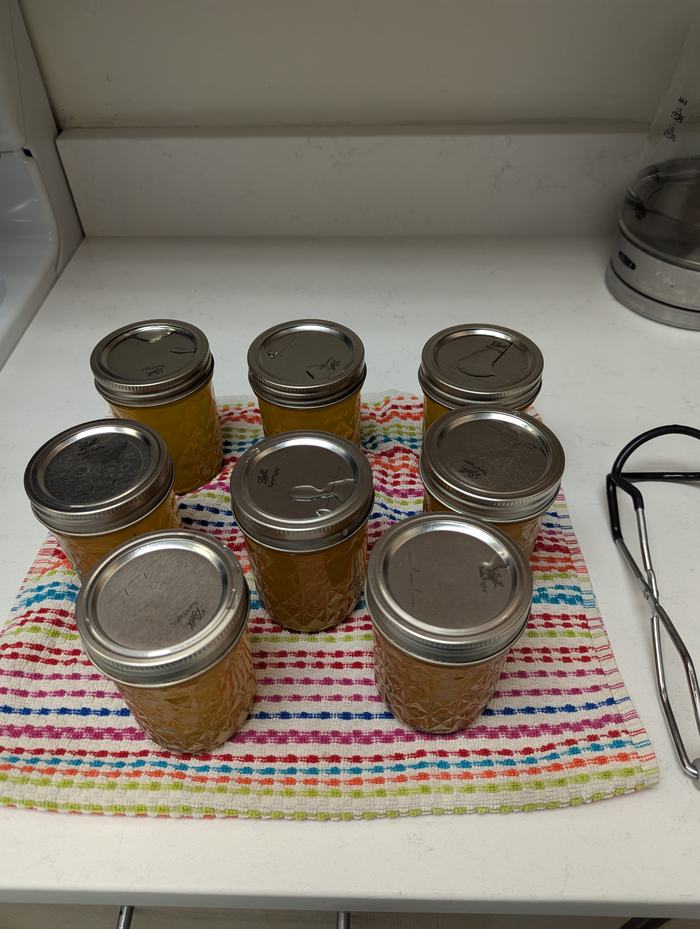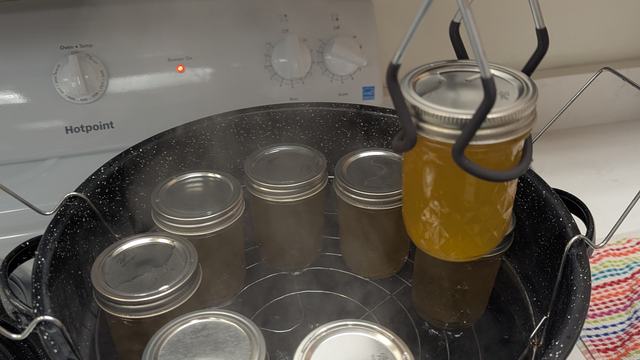
I know chefs and many home cooks love to be creative. Adding a little of this and a little that to a recipe to make it their own or totally inventing something new is part of the fun of cooking. But there are times when creating and doing something new could be dangerous. That’s when you’re preserving food at home. I’m talking specifically about canning including making pickles, jams, jellies and tomato sauces.
Food preservation recipes and techniques are constantly being studied and revised. Just because “you’ve always done it this way” or this is how your mother (or grandmother) taught you, that may not be the safest and most up-to-date procedure. We all know that just because someone published a recipe on the internet does not make it “safe”.
Here are some key points to look at a preserving book or recipe to see if it is safe:
- It comes from a university, cooperative extension or USDA source. Recommends boiling water bath for fruits, jams, jellies and pickles.
- Recommends pressure canning/processing for low acid foods such as vegetables, meats and fish.
- Recommends adding an acid (usually citric acid or lemon juice) to canned tomatoes.
When answering questions about food preservation, I seek the assistance of several valuable resources. The National Center for Home Food Preservation is nationally recognized as a reliable and research-based source of food preservation information. Their website has a wealth of information and is available through the University of Georgia.
Sometimes I prefer a printed book. So Easy to Preserve (6 th edition, 2020) is a recipe and instruction book from the University of Georgia’s Cooperative Extension. This beautiful book contains the latest recommendations for safe food preservation and lots of recipes. Many consider this to be the best reference available on the topic. If you like to own cookbooks, you can purchase it directly from their website at UGA for $35 (plus shipping).
Another great reference is the latest (2015) edition of the United States Department of Agriculture’s (USDA) “Complete Guide to Home Canning”. This book can be found completely online at the National Center for Home Food Preservation’s website.
Pressure canners are essential when preserving low acid foods such as vegetables, meat or fish. If you are planning on doing this, sure the gauge on your pressure canner is accurate. It is recommended that they be tested yearly. We offer this service free of charge. Don’t take the chance of improperly processed foods due to an inaccurate gauge.
We’ll be testing canner gauges on Monday June 15 from 2:00 to 3:00 p.m. To have a gauge tested, bring the canner lid with the gauge attached to the Brunswick County Extension Center in Building N at the Government Center in Bolivia. It only takes a few minutes for the peace of mind knowing your gauge is accurate. Please note: we are only able to test canners made by the Presto company and their associated brands. Weighted gauges do not need to be tested.
If this time is not good for you, drop your canner lid off at the Extension Center prior to the testing time and then pick up after the testing is completed. We will also test canner gauges by appointment throughout the summer. Just call and ask for Avery Ashley, our Family and Consumer Science Extension Agent.
We also plan to offer food preservation classes later this summer. We’re thinking pickling, fermentation, jams and jellies, dehydrating and possibly pressure canning. Please give Ashley a call at our office and let him know if there are specific topics in which you’d be interested.
If you’re unsure if a recipe is safe or has been tested it’s best if you don’t use it. There is no sense in spending the time, money, energy and good produce and then lose the product. Or worse yet, make someone sick.
Syracuse is a Family and Consumer Science team member and can be reached at NC Cooperative Extension, Brunswick County Center 910-253-2610 or by email at clsyracu@ncsu.edu