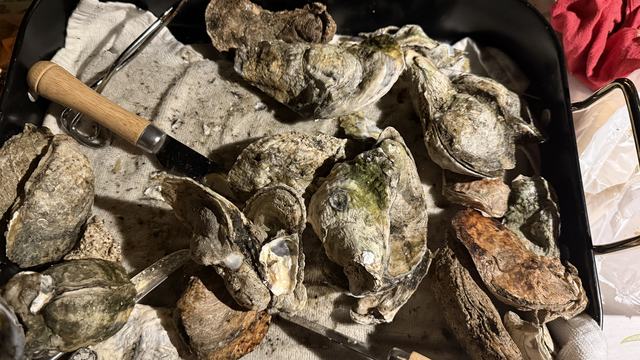
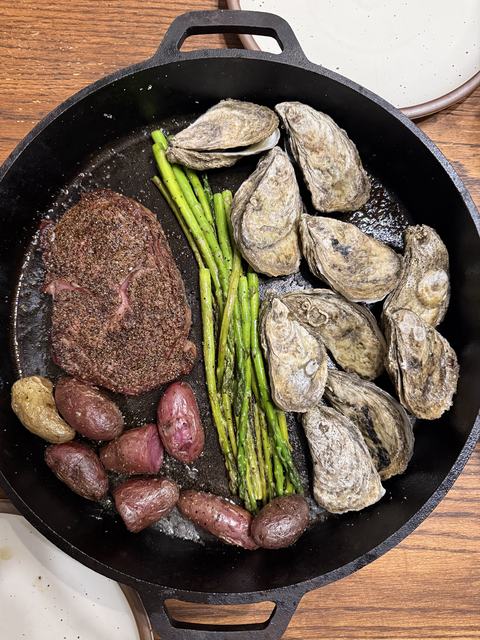
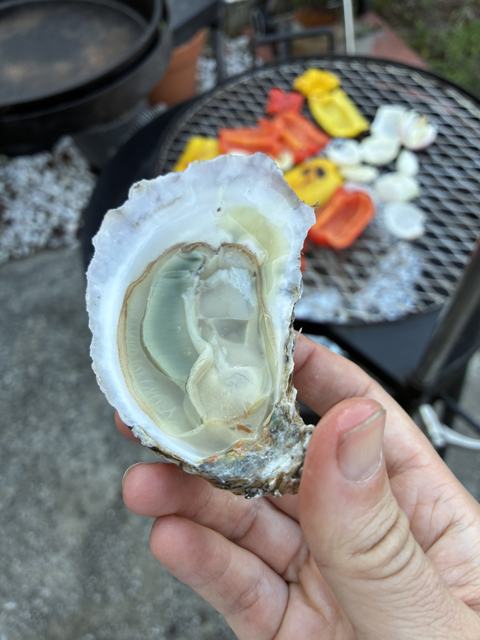
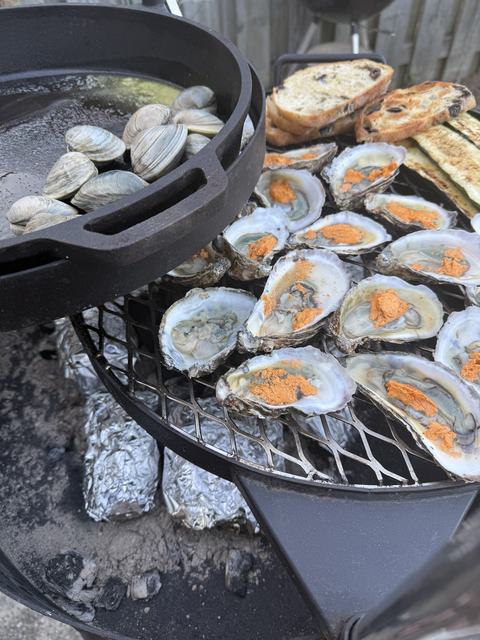
October has a lot going for it. The mornings have a cozy chill, the days are comfortable, and it’s North Carolina Oyster Month and the opening of wild oyster season. There are so many ways to enjoy an oyster: fried, steamed, baked, and more. Many of you have likely gathered around an open fire for an oyster roast with family and friends. The Crassostrea virginica, our native eastern oyster, is incredibly important to our food traditions, environment, and economy.
Adult oysters can filter up to 50 gallons of water a day, helping remove particles from the water and contributing to healthy coastal ecosystems. Perhaps you’ve noticed that oysters of the same species can taste different depending on where they’re harvested. Their flavors are influenced by the water in which they grow, including its salinity, nutrients, and other environmental conditions. Here in North Carolina, you’ve likely seen oysters marketed from Stump Sound, Bogue Sound, and Core Sound. Each growing area can produce oysters with its own distinctive flavor, making North Carolina oysters a unique reflection of our coastal waters.
The North Carolina Division of Marine Fisheries considers the eastern oyster a species of concern because of declining populations. Across the state, restoration efforts are underway to create new oyster habitat and establish oyster sanctuaries. Oyster reefs provide critical habitat for a variety of marine life, including fish, shrimp, and blue crabs at different stages of their life cycles. Protecting and restoring oyster habitat benefits not only oysters themselves but also the broader coastal ecosystems and communities that depend on them.
Oysters are also an important part of North Carolina’s coastal economy. In 2022, the state’s oyster industry contributed $31.7 million to the economy, with approximately $14.6 million coming from farmed oysters. More recent research led by NC Sea Grant suggests that the shellfish industry generates more than $27 million in economic impact and supports more than 500 jobs. Oyster farming provides another way to enjoy locally grown seafood while supporting coastal businesses and working waterfronts.
Aquaculture has also helped increase the availability of oysters for enjoyment on the half shell. Unlike wild oysters, which are subject to seasonal harvest restrictions, farmed oysters can be available year-round. This gives consumers more opportunities to enjoy fresh, locally grown oysters while supporting North Carolina’s shellfish industry. Farmed oysters are grown in the same waters but in floating cages, bags, suspended longline systems, or bottom culture.
As you celebrate North Carolina Oyster Month, consider seeking out oysters from different areas of our state. Ask your local seafood market or restaurant where their oysters come from, try varieties from different growing areas, and take time to appreciate the waters and people behind each harvest. Whether you prefer them raw, fried, steamed, or roasted over an open fire, enjoying North Carolina oysters is a delicious way to celebrate our coastal heritage and the natural resources that make it possible