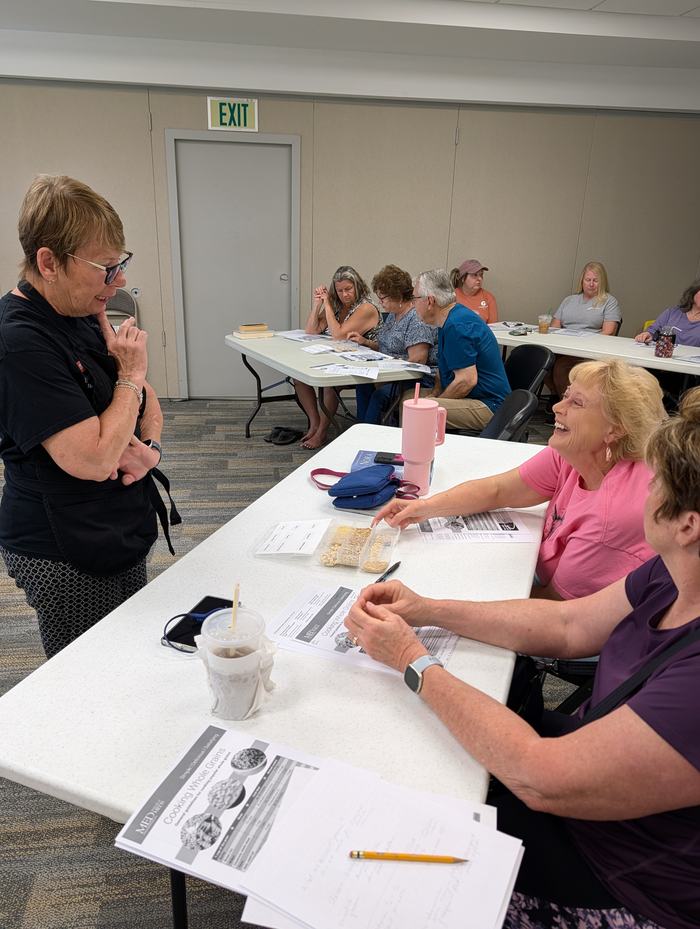
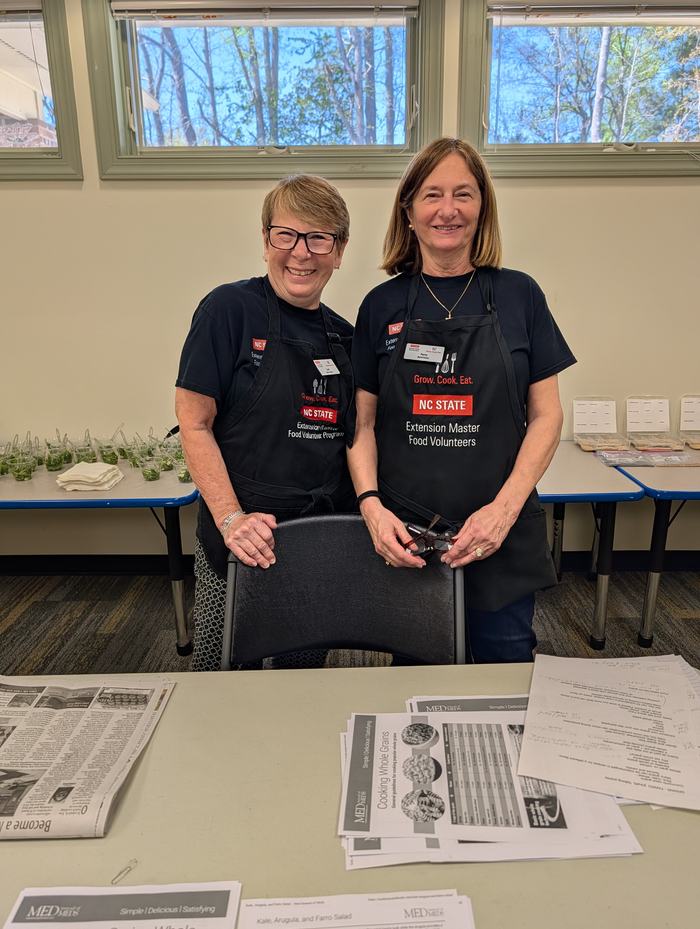
The topic of last month’s Healthy Home Cooking Club at the Rourke Library in Shallotte was grains-specifically whole grains. The instructors were Extension Master Food Volunteers Lori Van Horn and Terry Amrhein both from Sunset Beach.
The Extension Master Food Volunteers (EMFV) started with an introduction to grains. Whole grains are minimally processed and still contain all the parts of the grain including the germ, endosperm and bran. Refined grains are missing one or more of these components. These more refined grains lack some of the nutrients found in their whole grain counterparts. Nutrition experts recommend that at least half of the grains we eat should be whole. They showed samples of unprocessed whole grains such as oatmeal, quinoa, brown rice, popcorn, bulgar and farro.
The EMFVs offered some ideas on how to increase the amount of whole grains we eat. They said to “start small”—don’t eat a bunch at one time. Mix the whole grains and refined versions half-and-half until you get used to the whole grain flavors and textures. They encouraged trying different types of whole grains to see which you like. They suggested cooking extra whole grains when you make it and freeze for future use. It can be placed flat on trays and frozen and then poured into zip top bags in the freezer. These cooked whole grains can then be quickly defrosted in the amounts needed for salads, bowls or side dishes.
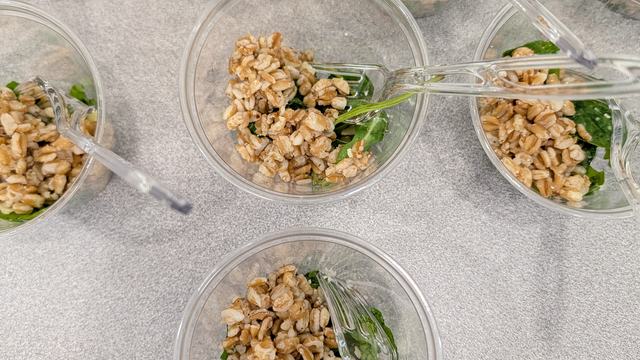
The grain they featured was farro. Many of the participants hadn’t ever tried farro. It’s considered an “ancient” grain and is a member of the wheat family—so it does contain gluten. Farro is very versatile and can be eaten cooked (like oatmeal) for breakfast, eaten chilled on a salad for lunch or warm like pilaf with a vegetable for dinner. It tastes slightly nutty and has a chewy texture.
The recipe and sample for the month was Kale, Arugula and Farro Salad from our Med Instead of Meds recipe file. Check out the website for more great information on whole grains and recipes that follow the Mediterranean-style diet at Medinsteadofmeds.com. The kale gives it hearty bulk while the arugula provides a light peppery flavor to the background. Farro offers a texture contrast (and, of course, the whole grain nutrition). Creamy feta and crunchy almonds round out the salad to perfection. It is topped with a simple, homemade Citrus Salad Dressing to bring all the flavors together.
The original recipe also calls for one “bunch” of kale? How much is that? The EMFV tested the recipes and decided to use about four to six ounces---you can add more or less based on your preferences. Any other green could be used if you’re not fond of kale. They suggested baby kale or spinach.
Kale, Arugula and Farro Salad
2 cups cooked farro, chilled
A bunch of kale
5 ounces arugula
1/2 cup sliced almonds, toasted
3 ounces feta cheese, crumbled Citrus Salad Dressing
3 lemons, juiced
6 tablespoons olive oil
Salt and pepper to taste
Wash and remove ribs from kale as needed. Chiffonade kale into small strips. Combine the farro, kale, and arugula.
To make the dressing, simply whisk the ingredients together or place in a sealed jar and shake. Note: each lemon contains 2-4 Tablespoons juice.
Dress the greens and farro mixture with the Citrus Salad Dressing. Top with almonds and feta.
Tip: It will take about 3/4 cup of uncooked farro to equal two cups cooked. Rinse and place the uncooked farro and put in a large pot. Add water to cover the farro plus about 3 or 4 inches. This is more water than the farro will absorb. Cook for about 45 to 55 minutes, or until tender. Then drain as you would pasta. Chill for this recipe.
The purpose of the Healthy Home Cooking Club is to gather people together who share a passion for cooking and eating. The focus is on healthy cooking and eating at home. This club is coordinated by the Family Consumer Science team from the NC Cooperative Extension here in Brunswick County in cooperation with the Rourke Library. The team is led by Avery Ashley, Family and Consumer Science Agent. Each month the program will be a short educational program, usually including a food demonstration and sample tasting. The atmosphere is casual and the participants are encouraged to bring ideas, photos and recipes on the topic of the month to share. The Healthy Home Cooking Club meets the final Tuesday of each month from 3-4 p.m. at the Rourke Library in Shallotte. The next topic will be Homemade Salsas on Tuesday April 28. Reservations are required and can be made by calling the library.
Resources:
Med Instead of Meds Kale Salad
Med Instead of Meds Cooking Whole Grains
Med Instead of Meds Make Your Whole Grains
Syracuse is a Family and Consumer Science team member and can be reached at NC Cooperative Extension, Brunswick County Center 910-253-2610 or clsyracu@ncsu.edu