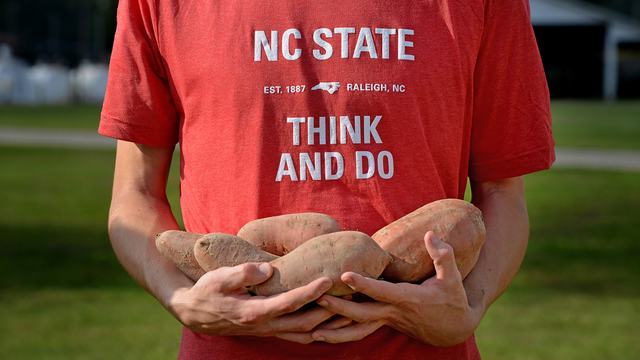
North Carolina grows more sweetpotatoes than any other state. According to the NC Sweetpotato Commission, the harvest begins in August and peaks in October and is usually completed by Thanksgiving. So, there should be plenty of sweetpotatoes to be found right now.
Sweetpotatoes are native to the United States, indigenous native Americans were growing them when Columbus came here in 1492. By the 16th century they were being cultivated in the southern states and became a staple of our traditional cuisine.
When buying sweetpotatoes, make sure that they are firm to the touch and show no signs of decay. For even cooking, choose sweetpotatoes that are similar in size and shape. There are hundreds of types of sweetpotatoes ranging from white and mild to deep red and super sweet to purple with a nutty flavor. Store sweetpotatoes in a cool, dry well-ventilated place. Don’t store them in the refrigerator because this will result in a hard center and unpleasant taste.
Sweetpotatoes are chock full of nutrients. One medium sweetpotato provides about 100 calories. This one sweetpotato contains over 100% of the recommended daily amount of vitamin A. It also contains 4 grams of fiber along with vitamin C as well as beta-carotene, potassium and antioxidants.
Sweetpotatoes and yams are constantly confused for one another, but the truth is what you’ve been calling a yam most of your life is most likely a sweetpotato. Even more, it’s possible that you’ve never even tasted a real yam! According to the NC Sweetpotato Commission, the so-called “yams” we see at the supermarket produce section are nearly always sweetpotatoes. Most people think that long, red-skinned sweetpotatoes are yams, but they really are just one of many varieties of sweetpotatoes.
Both sweetpotatoes and real yams are considered tuberous roots and both are sweet and delicious. The size of real yams can range from the size of a small white potato to over 100 pounds. The skins may be dark brown or light pink, while the flesh is white, yellow, purple or pink. Real yams grow in tropical climates, primarily in South America, Africa and the Caribbean and are hardly ever sold in U.S. markets.
Why people think sweetpoatoes are yams is a long and confusing story. But basically, it comes down to a slick marketing campaign in the 1930’s. A new orange-fleshed firmer variety of sweetpotato was introduced in 1937. In order to make it different from the white softer varieties of sweetpotatoes that people were used to at the time, the producers chose to label them “yams”. And so the confusion.
Does it matter what you call them? Not really. Just know that any U.S. based recipe that calls for “yams” is really asking for sweetpotatoes. If you really want to know more about the differences between sweetpotatoes and yams, check out the quiz “Sweetpotato, Yam or Both?” at the NC Sweetpotato Commission’s website.
Here’s another point of discussion about sweetpotaotes. How do you spell it? Is sweetpotato one word or two?
Spell check keeps telling me it’s two words. But the folks at the NC Sweetpotato Commission say the correct spelling is one word: sweetpotato. According to their website (ncsweetpotatoes.com) they officially adopted the one-word spelling back in 1989. They say sweetpotato should be a noun.
When you say sweet potato (two words) you are using the word sweet as an adjective to describe a potato. But, sweetpotatoes are different from other potatoes that use a descriptive adjective such as white, red or russet to describe them. They want sweetpotato to be the name of the vegetable. They want sweet to be part of the name and not a descriptor.
I’m trying to support our local NC farmers by using the one-word noun when referring to sweetpotatoes. But it hasn’t become mainstream and looks like I didn’t spell check or proofread what I’m writing. It does look odd. You can go to their website and sign a petition to say that you’re going to help tell the story about sweetpotatoes and begin spelling it that way.
All these words. Bet you didn’t know sweetpotatoes could be so confusing. Just remember this, no matter what you call them or how you spell it, sweetpotatoes are good for you and good eating.