Instead of an apple a day, why not try an avocado?
That’s what Carolyn Dunn, PhD, RD, LDN suggested in a recent blog post on the Eat Smart, Move More, Prevent Diabetes (ESMMPD) website. She shared that more and more research is pointing to the protective effect of avocados. Once written off as a too high in fat and calories, avocados are now understood to be a great addition to your diet.
Dunn, a William Neal Reynolds Distinguished Professor Emerita at NC State, says that avocados are high in monounsaturated fat---this is the “good” fat. Monounsaturated fat has been shown to lower blood cholesterol levels. One half of an avocado contains about three teaspoons of this healthy oil.
One avocado has around 300 calories, virtually no sodium, only 1 gram of sugar and a whopping 13 grams of fiber. While a whole avocado may not fit in your daily calorie budget, incorporating ½ of an avocado on most days would be a great benefit to your diet and overall health. Avocados help regulate blood sugar thanks to their low sugar content. They also help with gut health with their high fiber content.
They also contain vitamins B6, C, K and E as well as folate. They are a great source of potassium---even more than bananas. One half of an avocado (weighing about 3 ounces) provides 485 mg of potassium while a medium banana (weighing about 4 ounces) provides 358 mg potassium. Making avocados a winner!
Avocados might be mistaken for a vegetable, but they are actually a fruit. It’s estimated that Americans eat about nine pounds of this creamy fruit per capita per year. That's a big increase from back in 2000 when we averaged just one pound a year. If you’re not eating more, it may be time to jump on the bandwagon.
Avocados need warm sun during the day and a cool breeze at night to grow. California is the largest producer of avocados in the U.S. but they are also grown in Florida and Hawaii. A majority of the avocados eaten in America are imported from Mexico. It takes about 14-18 months for an avocado to grow and each tree can produce about sixty pounds of fruit per season. Avocados do not ripen on the tree and are picked early. Color is not an indicator or ripeness.
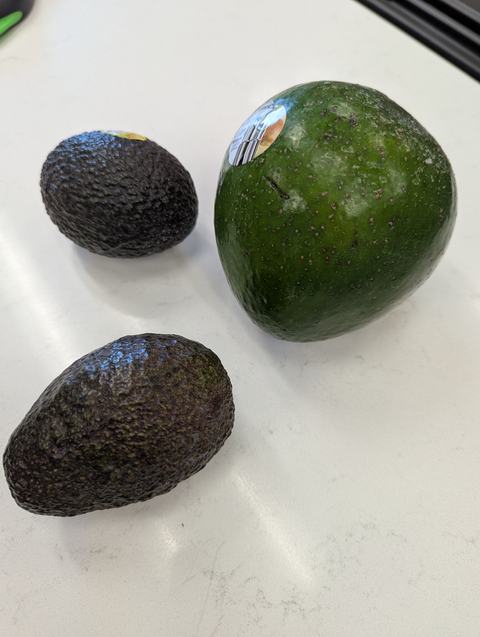
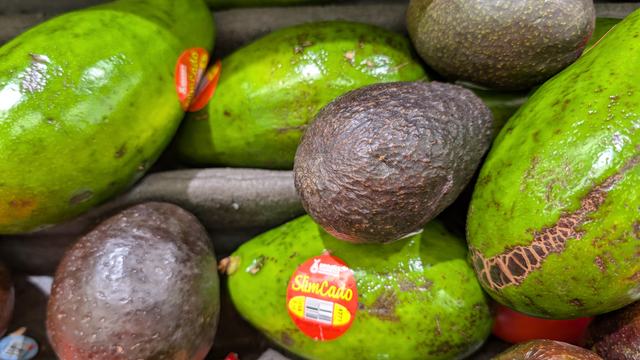
When buying avocados look for ones that are green in color and firm, they will likely be unripe and hard. Choose avocados that are heavy for their size, with unblemished, unbroken skin. Avocados will ripen in seven days at room temperature (60-75 degrees F). As they ripen the skin will begin to feel softer. Pick up the avocado and gently squeeze, it should be soft but not mushy. If you need to speed up this ripening, place the fruit in a small brown paper bag with an apple or a banana for 1-3 days. Once the avocados are ripened, they are ready to use or can be placed in the refrigerator since cold stops the ripening process.
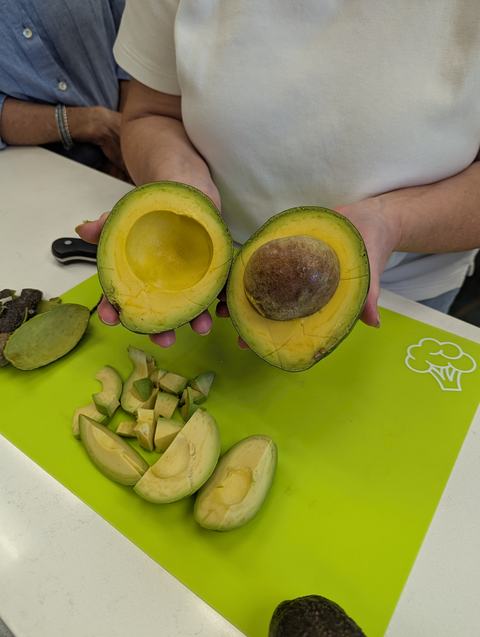
Dr. Dunn suggests if you have a cut avocado that needs to be stored, leave the pit in and put a few drops of lemon juice or neutral oil on the cut flesh and store sealed in the refrigerator. When you are ready to use, cut away any discolored flesh. If you have overripe avocados, mash them and add chopped jalapenos or other peppers, chopped tomatoes, salt, and lime for a quick guacamole.
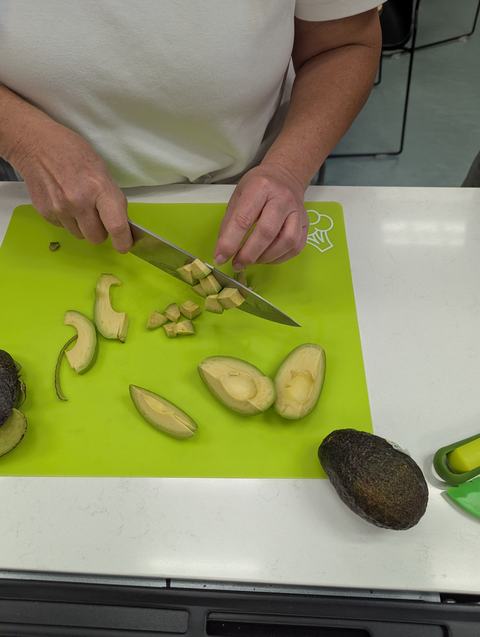
Try substituting mashed avocado in sandwiches, on toast or as a healthy spread in place of butter, margarine or mayonnaise. Avocado can be a nutrient-dense alternative in baking, dips, and smoothies, reducing cholesterol and saturated fats while maintaining creaminess. A mashed avocado can also replace butter or shortening in baked goods cup for cup.
You may think this is a crazy idea, but another ESMMPD blog post talked about using avocados in chocolate desserts. Madi Johnson shared how she incorporated avocados in brownies and chocolate popsicles. She served these items to unsuspecting guests who couldn’t tell the difference. Worth a try.
For more information on Eat Smart, Move More, Prevent Diabetes go to their website at Eat Smart, Move More, Prevent Diabetes. This is a CDC recognized, 12-month diabetes prevention program based on strategies proven to prevent or delay type 2 diabetes. This program has been developed by NC State University and NC Cooperative Extension.