In last week’s column I wrote about both salt and pepper. This inspired
more questions and thoughts about salt and it’s use in food.
There are lots of different kinds of salt available today. Some are
interchangeable. Others not so much. No matter where salt comes from it
still is sodium chloride. Which one should you use? It’s really depends upon
the use and your taste buds.
Shaker of Salt
(Updated: Feb. 13, 2026, 4:46 a.m.)
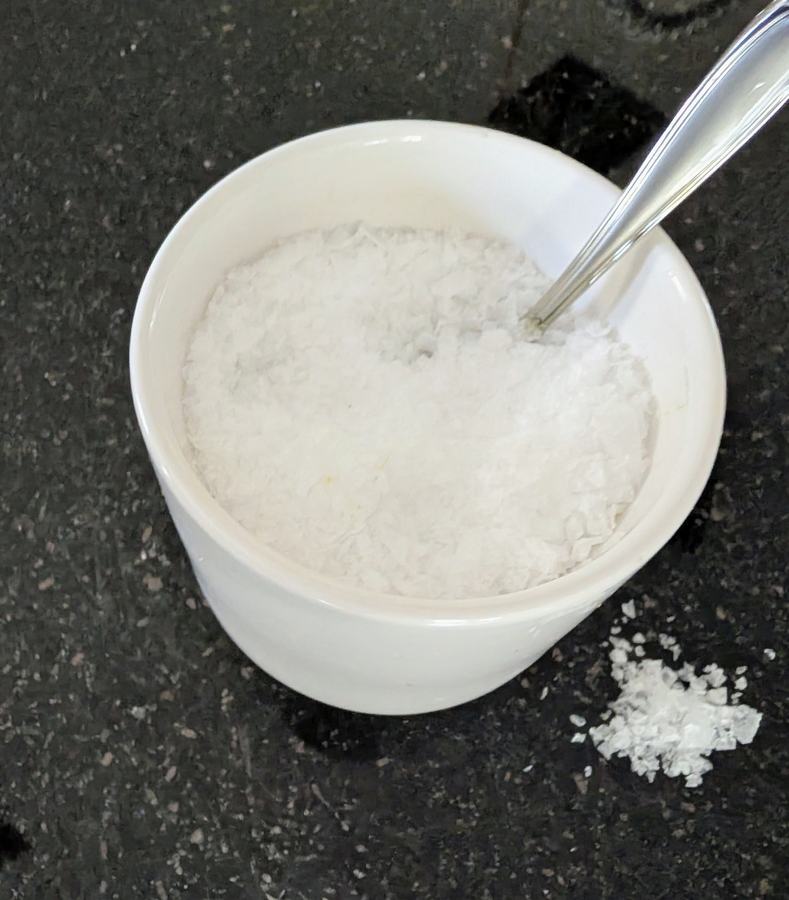
Table salt is the most common type of all-purpose salt found in most
homes and restaurants. It is highly refined and has fine grains. Used in
cooking and baking.
Iodized salt is regular table salt with iodine added. Putting iodine in salt
started over 100 years ago helped reduce deficiencies in iodine in people’s
diets. Iodine is important for general health but especially thyroid health.
Putting iodine in salt helped to eliminate goiters that were caused by iodine deficiency. If you don’t consumer foods that naturally have iodine (such as
dairy products and fish) you may want to consider using salt with this
additive.
Kosher salt has a coarse texture. It is a mined salt and does not have
additives. It is often sprinkled by hand allowing a chef to control the
amount of salt added to a dish.
Sea salt is made by evaporating seawater. This usually results in larger
crystals compared to the fine grains of refined table salt. Because of the
texture, if a recipe calls for sea salt you are actually using a little less than
the same amount of table salt. Some tout sea salt as a healthier alternative
to table salt because of minerals found in the ocean, but they are only
found in trace amounts in the salt.
Finishing salt is usually sprinkled on the top of food just before serving to
enhance flavor and add texture. Can have fine or coarse textures.
Flaked salt is a type of sea salt. It has larger, irregularly shaped flakes it is
frequently used as a finishing salt that provide a pleasant crunch and burst
of flavor when sprinkled on dishes. Because of the shape you usually need
less of this than if you used table salt.
Pink Himalaya salt became popular a several years ago. This pink salt
comes from the mountains of Pakistan. It is sodium chloride, just like other
salts and has the same sodium content as other salts. The pink color comes
from trace minerals including calcium, iron, magnesium, and potassium.
Some say that this salt is healthier because of these minerals, but the
mineral content is very small and you would have to consume well over the
recommended amount of sodium to get a meaningful amount of these
trace minerals. The bottom line of using Himalayan salt is that it is really no
different than other sea salt. Some folks do like this for the color when
sprinkled on food.
Pickling or canning salt is pure salt with nothing added. It is used when
preserving foods (specifically fermented and pickled foods). It dissolves
easy and keeps the brine clear. Additives such as iodine, non-soluble minerals (like in the Himalayan salt) and anti-caking agents could make
pickle brine cloudy or darken.
Because salt crystals come in a variety of shapes and sizes, they aren’t
necessarily interchangeable by volume in a recipe, especially when
preserving foods. For example, a third of a cup of kosher salt does not have
the same density as a third of a cup of pickling salt.
It’s also interesting to note: with all of these types of salts available to us,
the salt shaker isn’t the major source of salt (or sodium) in our diets. It’s
estimated that 75% of the sodium in our diets comes from prepared and
processed foods.
Resources:
https://esmmweighless.com/?s=salt+sodium
https://extension.umaine.edu/food-health/2024/07/18/salts/
https://health.clevelandclinic.org/do-sea-salt-kosher-salt-and-pink-salt-beat-table-salt
Syracuse is a Family and Consumer Science team member and can be reached at N.C. Cooperative Extension, Brunswick County Center 910-253- 2610 or by email at clsyracu@ncsu.edu
Join our mailing list!
Enter your email address to receive updates.
Written By