This is a hectic time! You may be reading this before or after Thanksgiving. With that
thought in mind, I’m sharing both before and after Thanksgiving food safety thoughts.
BEFORE:
IT’S STILL FROZEN. If it’s Thanksgiving morning and the turkey is still a little solid, you can finish thawing it by placing in a sink full of cold (not hot) water. Don’t open the package, leave it sealed. Change the water frequently (about every half hour). The cold water keeps the outside of the bird cold as the inside thaws. This is still going to take a long time. You may want to consider cooking directly from the frozen state. It’ll take 50% longer.
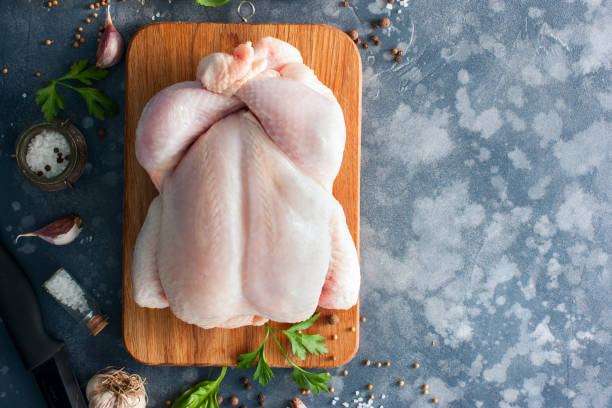
DON’T WASH THE TURKEY. You don’t need to wash that turkey before you cook or stuff it. OK, I know this is something you’ve always done or your mother (and even Julia Child) told you to do. If you wash your turkey, you could do more harm than good. Washing poultry does not help to remove bacteria, it actually does the opposite, it adds more water that allow bacteria to more easily spread. Splashing is the concern.
When washing, harmful bacteria like Salmonella and Campylobacter can be sprayed and splashed up to 3 feet on nearby surfaces. This could spread unwanted bacteria around the sink, countertop, onto other food, faucets or you, the cook. Classic cross-contamination.
I know, you’re saying, but it’s awful inside there, lots of blood and slime and “parts” that you may not want to think about. You could use a clean paper towel to blot off excess liquid, but be careful as you throw away the paper towel.
If you MUST wash or rinse the turkey before cooking be careful as you do it. Then be
sure to clean the sink area and the countertops nearby afterward with soap and a
sanitizing solution.
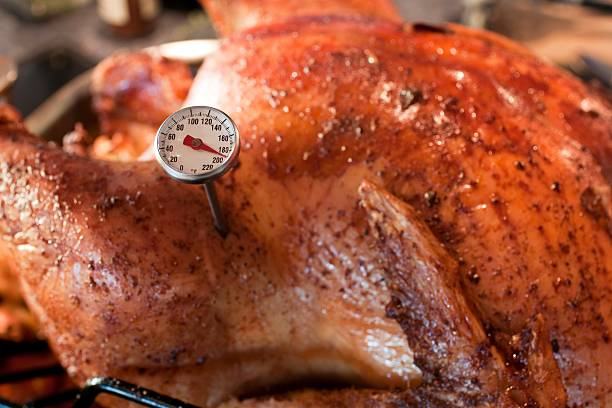
USE A THERMOMETER. Turkey should reach at least 165 degrees F. You may like it to be cooked a little higher. Some chefs recommend 180 degrees F for quality and cutting ability. But, feel comfortable that it is safe at 165 degrees.
Test the turkey in several spots. The breast will cook more quickly than the dark meat. Also, double check the temperature of the stuffing inside. It should be at least 165 degrees F, too. Don’t rely on the pop-up thermometer in the turkey. Pop-up timers may pop too early because of fat pooling at the tip, always use another thermometer to double check.
AFTER:
GET THOSE LEFTOVERS INTO THE REFRIGERATOR ASAP. Don’t worry about putting hot food into the refrigerator. Break large foods into smaller containers for quicker cooling. Throw away perishable food left at room temperature for four hours or more.
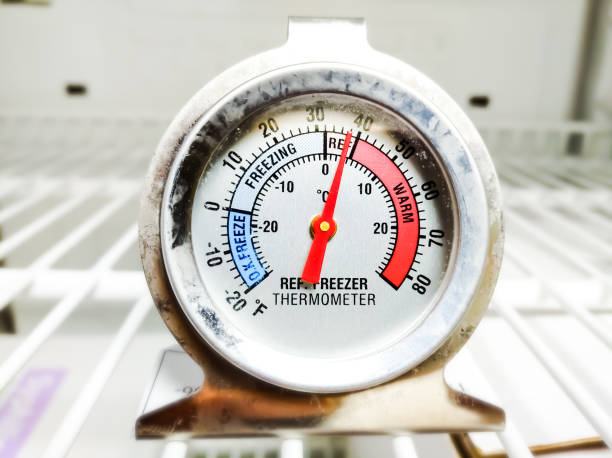
CHECK THE TEMPERATURE OF YOUR REFRIGERATOR. The colder your refrigerator is, the longer you can keep your leftovers.
If your refrigerator keeps food below 41 degrees F, leftover food can be kept for up to seven days. This is for food safety, there may be some quality loss sooner. Don’t overstuff the refrigerator, be sure to allow for air flow.
FREEZE LEFTOVERS. If you have more leftovers than can be eaten within this safe time you can safely freeze many of them. Plain frozen cooked turkey will keep four months at 0 degrees F. Turkey covered with broth or gravy will keep six months. Stuffing and gravy will only be good for about a month. These foods will be safe for a longer time, but may become dry, or lose flavor or quality.
GET AN EXTRA BIRD. An uncooked turkey will keep in your freezer for up to a year. If
you ended up with an “extra” turkey this holiday (or found a great sale you just couldn’t resist), don’t worry, it will be safe and have good quality if stored at 0 degrees or lower.
Our Food Safety Specialists at NC State Extension have developed a Holiday Food Safety Video Series. Check them out at Homegrown.extension.ncsu.edu. In addition to Thanksgiving topics, these short videos address appetizers, baking and other related topics for this holiday season filled with food.
Wishing you a happy and food safe holiday!
Syracuse is a Family and Consumer Science team member and can be reached at N.C. Cooperative Extension, Brunswick County Center 910-253-2610 or by email at
clsyracu@ncsu.edu