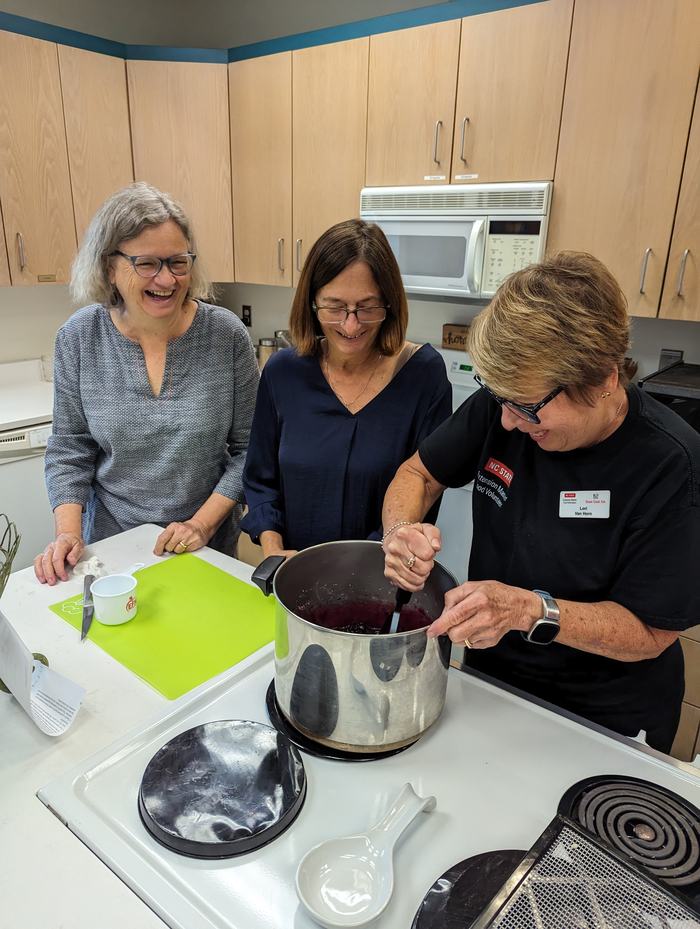
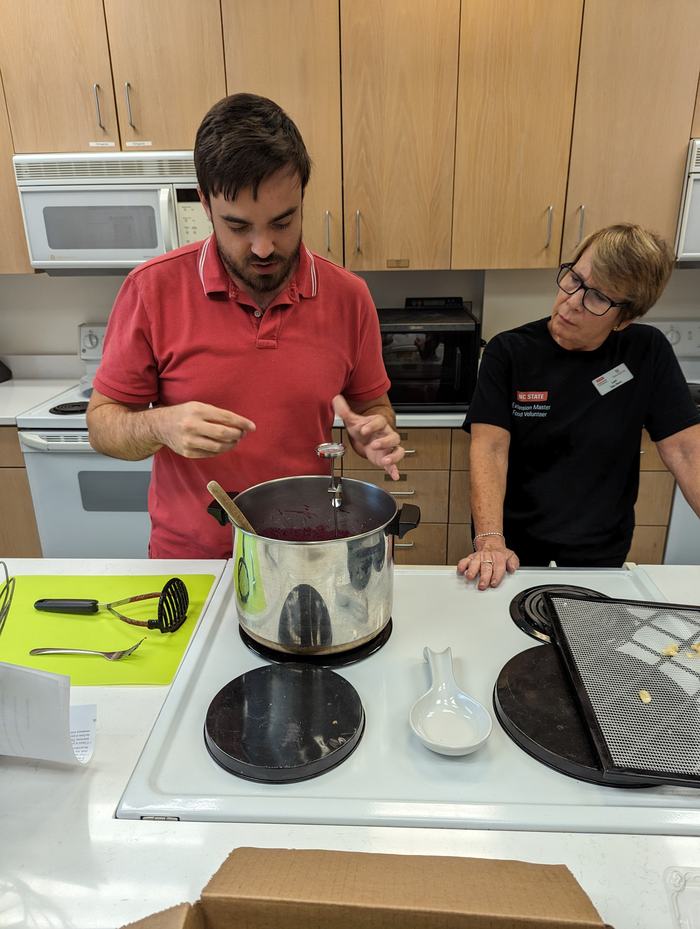
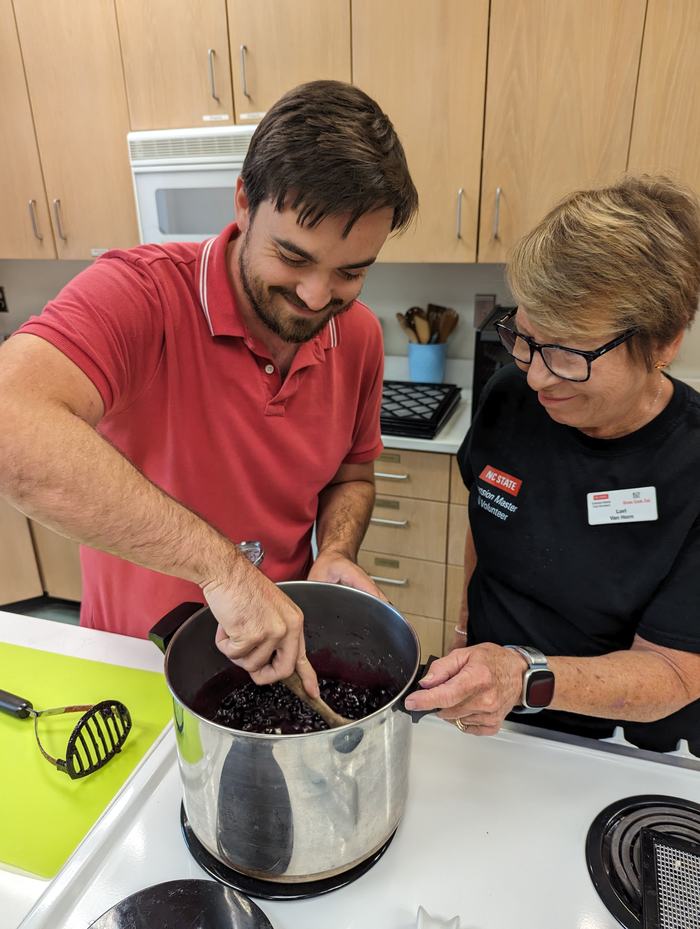
Our Extension Master Food Volunteers (EMFV) were recently in the Brunswick County Extension demonstration kitchen. They were assisting Family and Consumer Science Extension Agent, Avery Ashley prepare for upcoming jam and preserves classes.
If you’ve never done it before, making a jam is a good first project for a home food
preserver. Jams are thick, sweet spreads made by cooking crushed or chopped fruits with sugar. To get the proper texture, jams require fruit, sugar, pectin and acid in the right combination.
Pectin is the substance in fruits that forms the gel. Pectin is naturally found in some
fruits such as apples, crab apples and some plums and grapes. Other fruits contain little pectin, when this is the case, a commercial pectin product is usually added.
The proper level of acidity is also critical to gel formation. If there is too little acid, the gel will never set. If there is too much acid, the gel will get “weepy” and watery. For fruits low in acid, lemon juice is usually added. Commercial pectin products contain acids which help to ensure gelling.
Sugar is the preserving agent and adds to the gel. It also helps give jams their sweet taste. Cane and beet sugar are the usual sources of sugar for jam. Corn syrup and honey may be used to replace part of the sugar in recipes, but too much will mask the fruit flavor and alter the gel structure. Use tested recipes for replacing sugar with honey and corn syrup.
Many people are looking to make a jam product that has less sugar. You can’t just cut down on the amount of sugar in a traditional recipe. Too little sugar prevents gelling and may allow yeasts and molds to grow. There are special products and recipes that can be used to reduce or omit sugar. These contain modified pectin and gelatins or gums to make the jell.
Many of us remember jams that our grandmas made that had wax or paraffin on the top. Because of possible mold contamination, this method of sealing is no longer recommended. To prevent growth of molds and loss of good flavor or color, modern recipes instruct jams be put in sterilized jars, sealed with self-sealing lids and processed in a boiling water bath.
The EMFVs made blueberry jam from frozen berries. They carefully followed a recipe from So Easy to Preserve, a food preservation recipe and instruction book by the University of Georgia Cooperative Extension Service. Although blueberries are not typically high in natural pectin, the jam the EMFVs made did not have added pectin or acid. This recipe required constant stirring and watching the thermometer while cooking until the mixture reached the jelling point of 220 degrees F. The hot jam was ladled into hot sterilized jars and boiling water bath processed for five minutes.