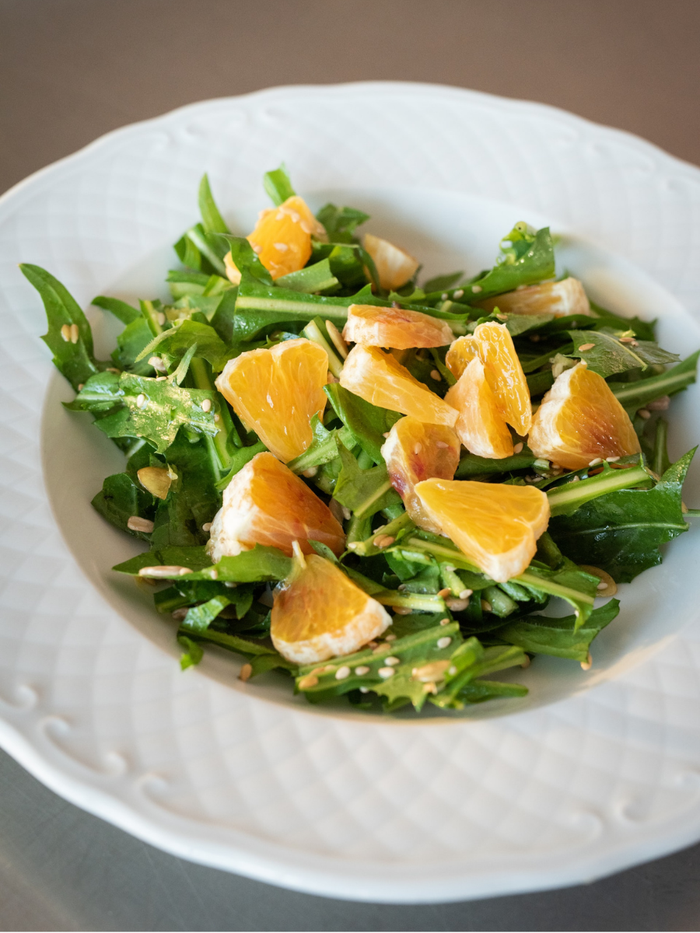
On my last visit to the grocery store I was happy to still see Cara Cara oranges available. I grabbed up a bag and hope to get some more before the season is over.
Winter is the season for citrus fruits and when we see them in the most abundance and at the best prices of the year. The Cara Cara orange season reaches its peak between December and April. So, there’s still a chance we can get them for a few more weeks.
If you’re not familiar with the variety, Cara Cara oranges are somewhat new to the market. They’re a cross between varieties of navel oranges and were first discovered in the mid-70s in Venezuela. About a decade later they made their way to the United States. I think they are much better than the average navel orange.
Their size and pink interior color make you think they could be in grapefruit family, but they aren’t. The bright pink color is due to the natural presence of the anti-oxidant, lycopene. Regular consumption of lycopene has been linked to a lower risk of heart disease, prostate cancer and macular degeneration
Cara Cara oranges are much sweeter in taste with lower acidity than a regular navel orange. Like all navel oranges they are easy to peel and seedless!
They are also nutrient packed. Cara Cara oranges provide 150% of a day’s vitamin C, 30% of a day’s vitamin A and are also a good source of folate. A medium Cara Cara orange has just 80 calories with 19 grams of carbs and 3 grams of fiber.
I usually find them sold in bags. They are typically a little more expensive than regular navel oranges, but I think worth it. If you do get to pick out your Cara Cara oranges, select those that are firm, shiny, and heavy for their size. The fruit should be free from soft spots or wrinkles. Like all navel oranges, Cara Cara are picked when they’re ripe. This means they’re ready as soon as you get them home.
Navel oranges should be stored in a cool, well- ventilated area. Store at room temperature for up to 4 days or in the refrigerator for up to 2 weeks.
While Cara Cara oranges are great just by themselves for a snack. Or you can add them to salads or other dishes.
Here’s a recipe you might like to try from our Med Instead of Meds program.