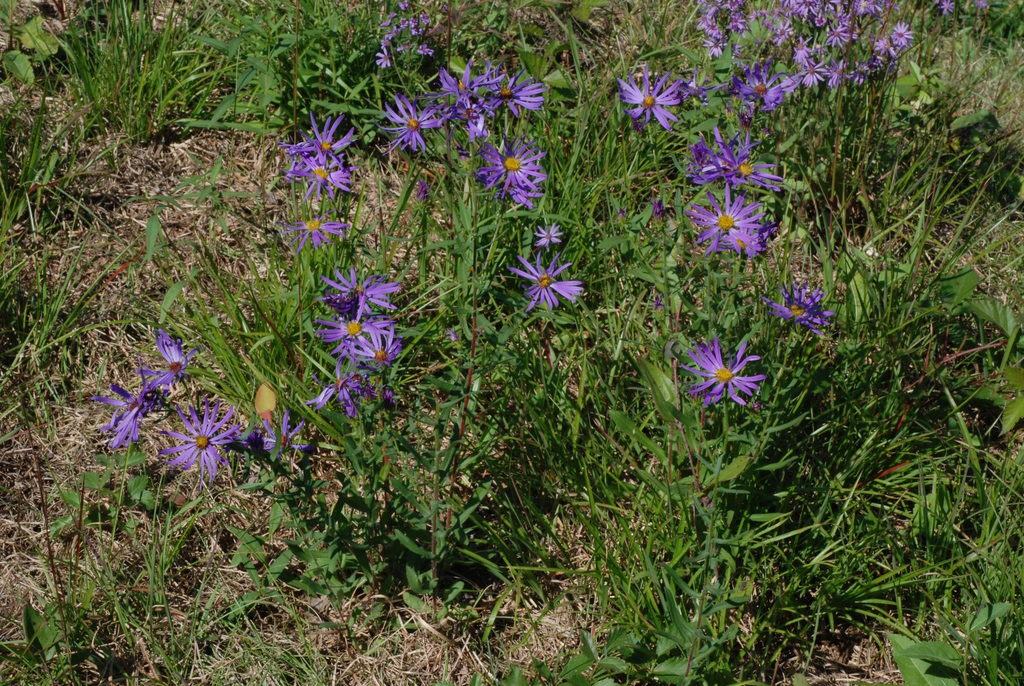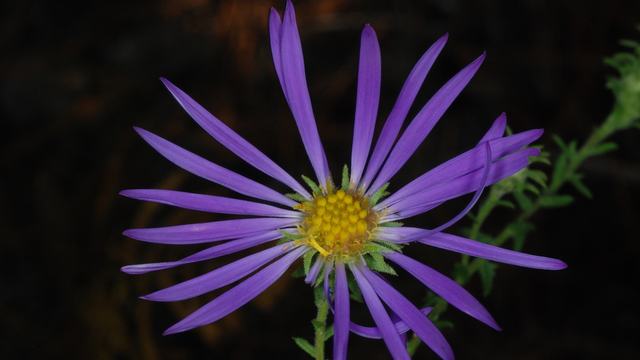
Symphyotrichum grandiflorum (Big-Headed Aster, Large-flowered Aster, Wild Blue Aster)
Written by Kathryn Copley, Extension Master Gardener Volunteer
Big-headed Aster is a perennial wildflower in the daisy family native only to North and South Carolina and Virginia where it grows in sandy soils, in dry woodland areas, along roadways and powerline rights-of-way, and disturbed sites.
Its striking 1- to 2-in. wide purple flowers (which are actually a flower head composed of many individual flowers) appear September to November as one of the last native asters to bloom, at a time when many perennials are fading. This late-season bloom makes it a positive addition to a wildlife-friendly garden because it is a late-season nectar source for pollinators.
It prefers full sun to light shade and well-drained, moderately moist soils, though it tolerates the sandy or slightly clay-leaning conditions common in its native range.
It can grow up to 4-ft. tall with brittle, erect stems, but to produce a more compact and bush plant, cut it back about halfway in late June or early July. This increased branching will lead to more dense fall flower production.