Written by Kathryn Copley, Extension Master Gardener Volunteer
False indigo is a genus of about 20 species of erect herbaceous perennials in the bean family native to eastern and midwestern North America. It is known for being a tough, low-maintenance, long-lived plant that tolerates a variety of conditions.
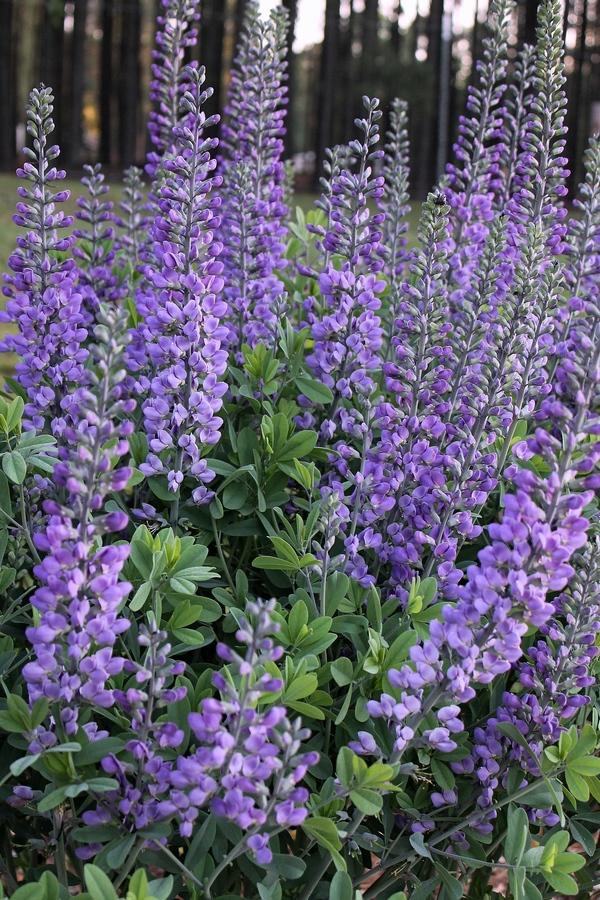
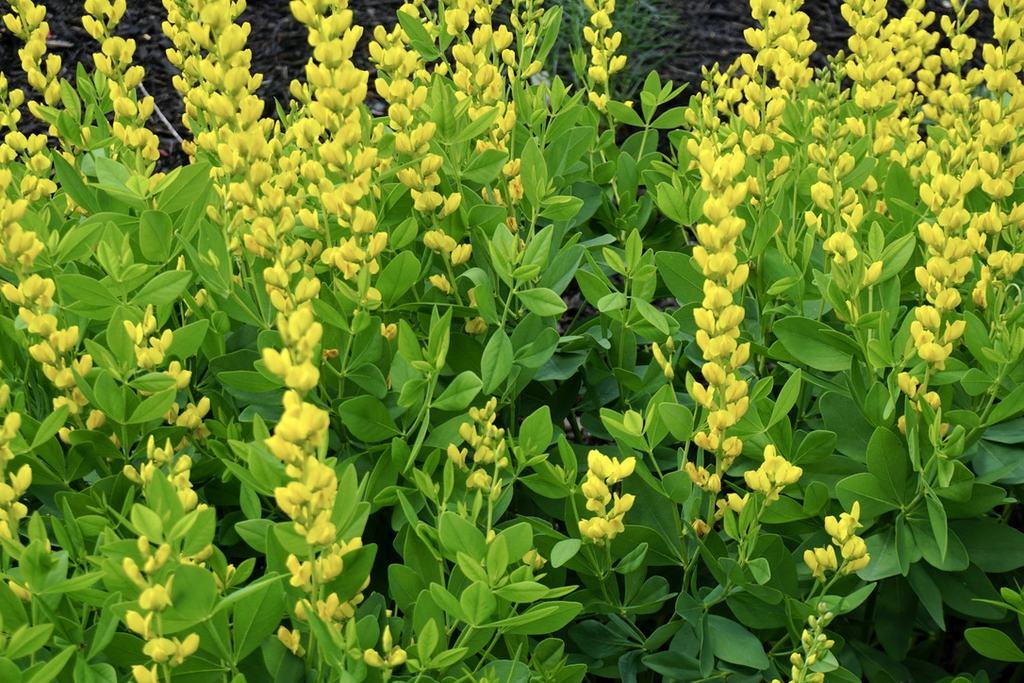
Baptisia flowers strongly resemble ornamental lupines, perennials that do not tolerate heat and humidity. Large, mature plants may hold as many as a hundred spikes in full bloom. The attractive flowers appear in late spring to early summer and are typically deep blue, gold/yellow, purple/lavender or white.
Most Baptisia bloom in March, April or early May, but it varies depending on species, region and weather. Bloom typically lasts between 3 and 6 weeks.
Leaves turn black rapidly in fall. Some find this attractive and let the stems remain for winter interest; others prefer to cut them back in fall.
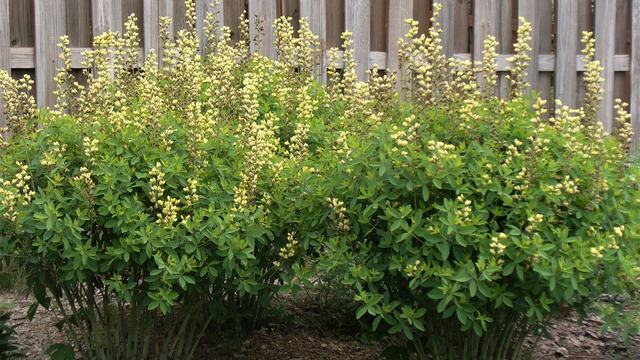
They will grow 2- to 4-ft. tall with a similar spread in partial shade to full sun, growing to their full height each year after the first or second season from planting, and thereafter growing steadily in width and bulk. Although the leaves die back to the ground completely each winter, Baptisia foliage is dense and attractive, giving the plant a shrub-like appearance.
They can continue to grow and bloom in the same location for decades. Their deep, brittle taproot makes them drought-tolerant but difficult to transplant, so it is best to allow space for the ultimate size of these plants when planting and then leave them in place. If moving an established plant is absolutely necessary, do so in spring. Propagation is by stem cuttings or seeds. For more information on the details of sowing fresh seed, scarifying seed for later sowing, and propagating by stem cuttings, consult this Clemson University fact sheet.