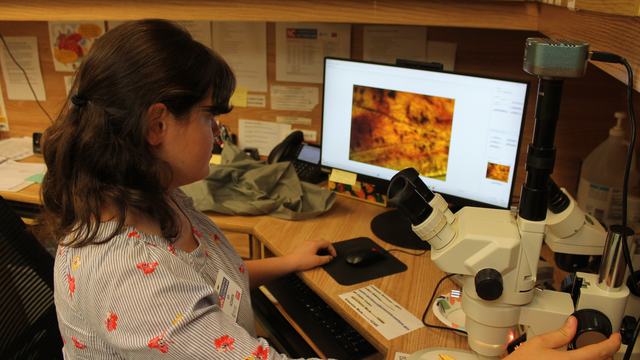
Butterflies and moths (insects of the order Lepidoptera) are important pollinators and play a crucial role in plant ecology. These insects are defined by the microscopic scales on their wings (as observed in image above) that often make up colorful patterns. They interact with plants in all stages of their lives, from egg to adult. The larvae of these insects feed on plant material, in some cases requiring specific host plants to survive. As adults, many species act as pollinators, feeding from the nectar provided by flowers and spreading pollen to other plants, ensuring genetic diversity.
Imperial Moth Spotted in Demonstration Garden
(Updated: Aug. 10, 2026, 2:33 p.m.)
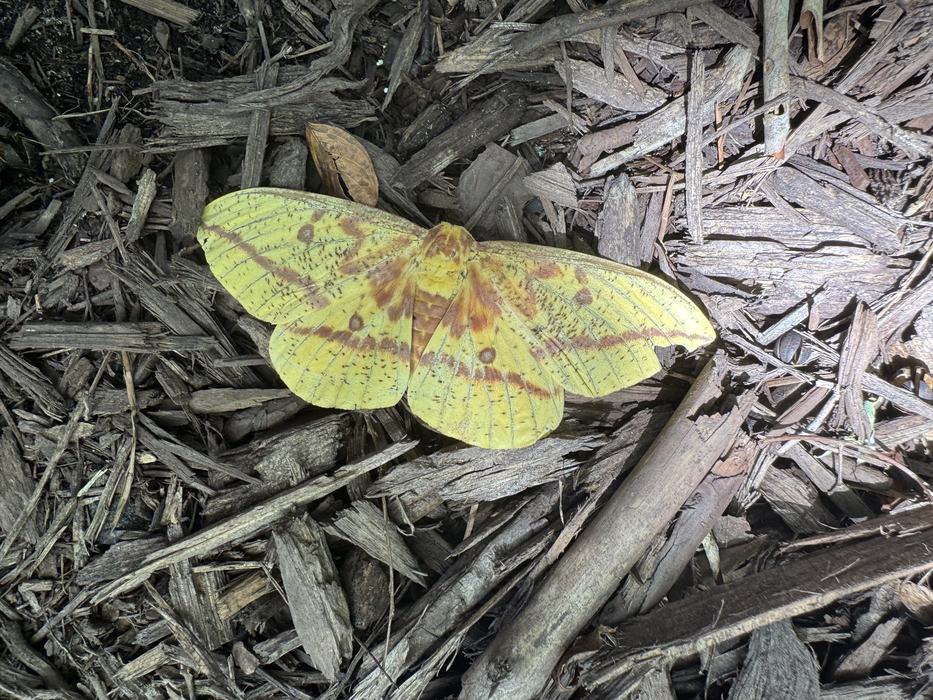
This particular moth is an imperial moth (Eacles imperialis) which is part of the silk moth family (Saturniidae) that was found at the end of its life cycle in our Demonstration Garden. This species overwinters by digging into the soil in their final stage as a caterpillar, and forming a pupa underground. They have multiple host plants and are generally not considered to be pests in the landscape. Although considered to be harmless, many of these moths do not make it to adulthood partially because they are susceptible to pesticides used to target harmful species.
Many lepidopteran larvae are considered to be major agricultural pests and insecticide is needed to control these populations. However, the exposure to nearby insecticides can still impact beneficial species which has led to the pollinator decline. Research suggests that insecticide use reduces both caterpillar abundance and pollination ability of moth species. This is why it is important to follow proper pesticide guidelines when the need to apply is determined, and to consider biological and cultural pest control before spraying.
To learn more about pollinators:
Sources:
Join our mailing list!
Enter your email address to receive updates.
Written By

More About