Herbs, spices and seasonings were the topics of the recent meeting of the Healthy Home Cooking Club at the Rourk Library in Shallotte. The purpose of this group is to gather people together who share a passion for cooking and eating. The focus is healthy cooking and eating at home.
This Healthy Home Cooking Club is coordinated by the Family Consumer Science team from the NC Cooperative Extension here in Brunswick County in cooperation with the Rourk Library. The team is led by Avery Ashley, Family and Consumer Science Agent and Extension Master Food Volunteers. Each month the program focuses on a specific subject. There is a short educational program, usually including a food demonstration and sample tasting. The atmosphere is casual and the participants are encouraged to bring ideas, photos and recipes on the topic of the month to share. Suggestions for monthly topics are welcome. Check with the library each month for the new theme.
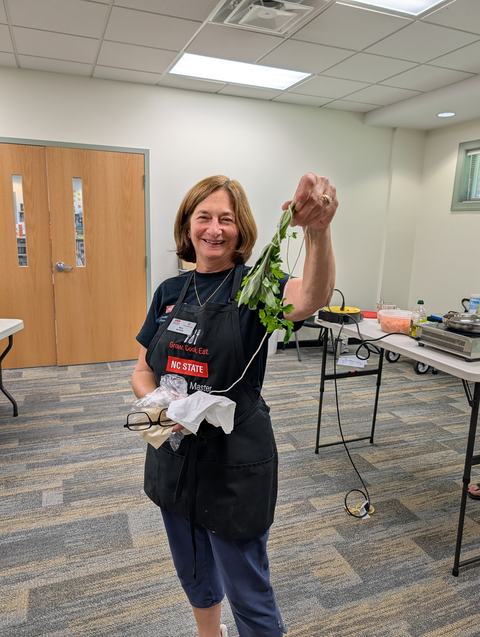
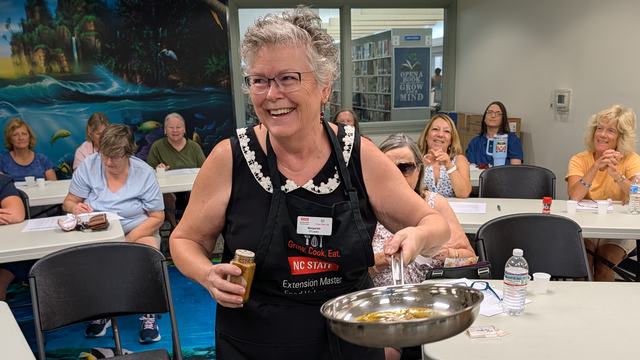
Extension Master Food Volunteers (EMFV) Margarete O’Leary from Supply and Terry Amrhein from Sunset Beach were the instructors for this class. They started with definitions:
Herbs are leafy. They can be tender (such as basil or oregano) or woody (like rosemary and thyme—these are tender leaves but woody stems).
Spices are hard and dry and can be leaves (bay), pods (vanilla), seeds (peppercorn and coriander) or bark (cinnamon)
Seasonings are flavor enhancers such as onions, garlic and sauces such as A1 or steak sauce. These are not considered herbs or spices, but they are used to “kick up” the flavors of food.
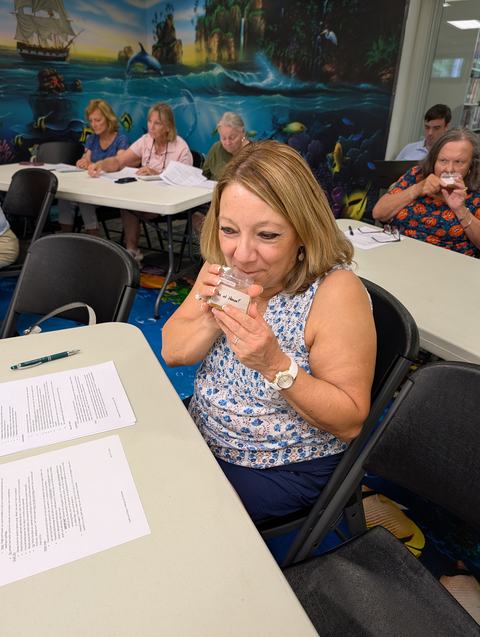
Most herbs and spices can be found in different forms such as fresh, dried, ground, whole or freeze-dried. In general, the further you get from the whole/fresh herb or spice the less flavor you’re going to get. They encouraged participants to branch out from the ordinary and experiment with new spices and herbs. Several samples of herbs and spices and blends were passed around and participants were encouraged to smell them. Smelling is a good way to tell if the herbs and spices in your cupboard have lost their potency.
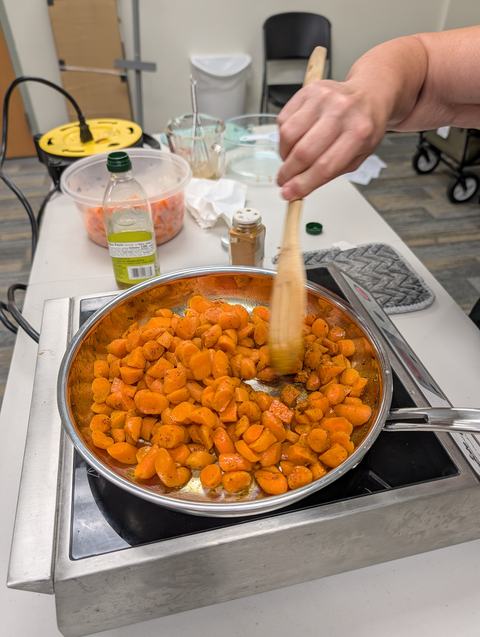
The EMFVs discussed how to get the most flavor from your herbs and spices through different extraction methods. Most people use the direct to food method---just adding the herb or spice to the hot or cold food. Another method is infusion--adding them to water, fat, acid, alcohol (a neutral flavored alcohol is often used with vanilla) or dry heat before mixing with the food. These methods can help you get more flavor from the herb or spice. O’Leary demonstrated how to “bloom” a spice in a small amount of oil. The appetizing aroma filled the air. The spice infused oil was then before added to cooked carrots.
Amrhein demonstrated infusing fresh herbs in water to make flavored beverages. Infused water can be made by the glass or pitcher as a delicious and appealing way to stay hydrated. She recommended tearing, crushing or muddling the herbs to release the flavor. Once the water and herbs are combined, the mixture should be covered and allowed to steep in the refrigerator for four or more hours to blend the flavors. She made two variations to share: strawberry mint and cinnamon apple infused water.
Extension Master Food Volunteers expand the reach of the Extension Family and Consumer Science team. They assist in programming in food, nutrition, food safety, food insecurity, food preservation and local foods here in Brunswick County.
The Healthy Home Cooking Club meets the final Tuesday of each month from 3-4 p.m. at the Rourk Library in Shallotte. The next topic will be sushi on September 29. Avery Ashley will be the instructor for this class. He’ll be sharing how to make sushi rice, choosing the fillings (note: they do not need to be raw fish) and he’ll be demonstrating the process of rolling sushi by making California Rolls. Ashley will also be making sushi dipping sauces. Reservations are required and can be made through the library.