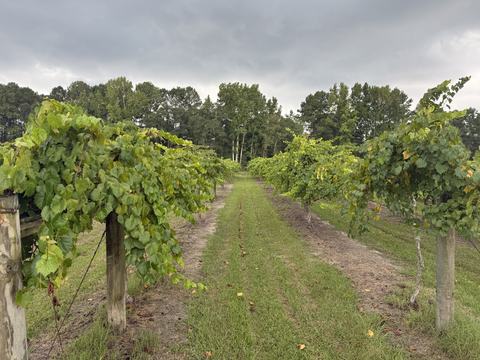
Growing up, every Sunday, I’d have lunch with my grandpa at my great-grandmother Katie’s house. She’d usually make a big fuss, serving fried chicken, a few sides, and vanilla ice cream, often topped with strawberries, for dessert. August and September were some of my favorite months to visit because she had a large muscadine tunnel in her backyard. As a kid, it felt magical walking through a tunnel of leaves and picking grapes above my head. As a child, muscadines were exclusively an outdoor food because you only ate the inside and discarded the skins and seeds on the ground. As an adult, I’ve grown accustomed to eating the skin and all.
Muscadines are native to the Southeastern United States. Long before Europeans arrived, historical records show that Native Americans preserved muscadines as dried fruit. We also know that by 1565, Spanish settlements in Florida were making large quantities of muscadine wine. The first recognized cultivar became known as ‘Scuppernong,’ and the name eventually became synonymous with almost any bronze muscadine, regardless of the actual variety.
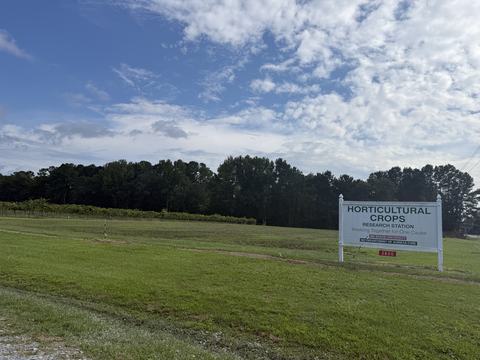
Breeding work has led to the release of improved cultivars, with ‘Carlos,’ ‘Doreen,’ ‘Noble,’ ‘Magnolia,’ and ‘Nesbitt’ among the most important cultivated varieties in North Carolina. ‘Scuppernong’ (bronze) and ‘Thomas’ (black) are the cultivars that many people are most familiar with, but there are numerous varieties on the market. At the Horticultural Crops Research Station in Castle Hayne, NC State Extension researchers breed muscadine grapes, among other small fruits. They test cultivars and evaluate their characteristics to identify varieties with ideal color, taste, and texture. They also conduct field trials to determine the best ways to manage diseases, insects, and weeds when growing these fruits to support commercial growers.
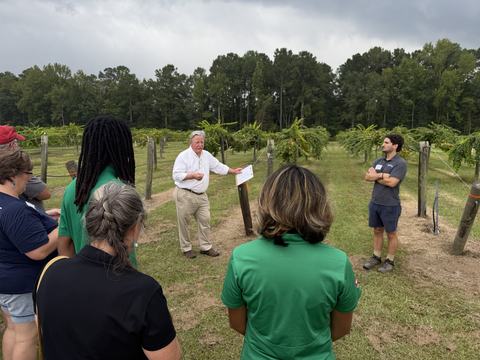
I recently visited the research station for Wolfpack Harvest, an annual event for NC State’s College of Agricultural and Life Sciences alumni and friends. As part of the event, we got to learn about their research and pick and taste different varieties. There is a long history of growing muscadines for wine production, before prohibition North Carolina had one of the largest wine industries in the country. Approximately 40-50% of the wine produced in North Carolina is muscadine.
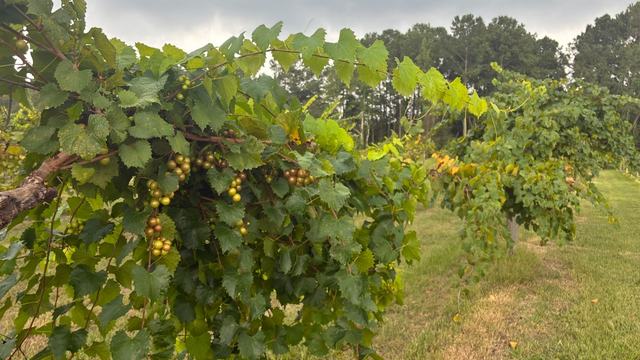
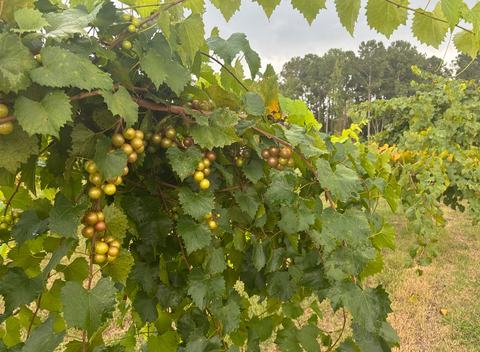
In addition to researching varieties for wine production, researchers are increasing varieties for the fresh market. I was able to try a variety I’ve never had called ‘Summit,’ which quickly became my favorite and happens to be one of the top five fresh-market cultivars recommended in North Carolina - this variety is pictured growing on the vine above. It has an incredibly crunchy skin that makes it especially good for eating right off the vine.
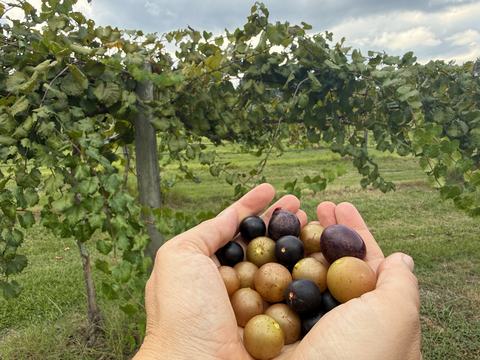
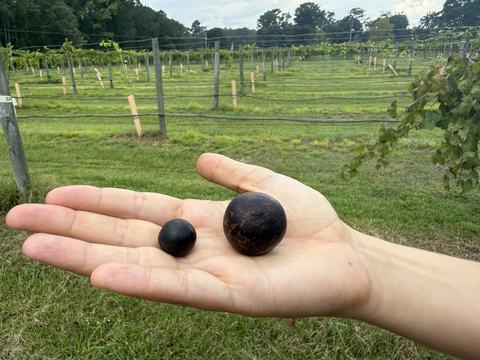
I encourage you to try some different muscadine varieties if you haven’t already. As you can see from the photos, they come in different sizes and colors, with subtle differences in flavor, texture, and suitability for eating fresh. While I no longer get to visit my great-grandmother’s vines, my grandma has a muscadine vine growing in her backyard that I get to pick from every year. Some traditions really do stay with us, and they make a perfect beach snack.